
How to measure a horse for a saddle… Hmmm… That’s a dilemma for not only first-time riders, but advanced riders. Most riders don’t know how to measure a horse for a saddle.
Now, most likely, you have access to a saddle or own your own saddle already.
But you’re here because you’re thinking about getting a new saddle, or checking to make sure your saddle actually fits your horse.
To achieve either of those ends, you need to know how to measure a horse for a saddle.
A well-fitting saddle is not a luxury but a necessity. You and your horse will have a much better experience when your saddle fits.
Plus, many behavioral issues can be traced back to an ill-fitting saddle, too, so check your fit before doing anything else about behavioral issues.
Let’s get started.
How to Measure a Horse for a Saddle: Proper Placement
The western saddle is meant to be positioned right behind the shoulder bone, or scapula, of your horse. Learning the saddle’s proper positioning is crucial to properly learning how to measure a horse for a saddle.
Remember to place the saddle on the horse’s back a little in front of where you want it to end up and pull the saddle back into position so all the hairs are laying in the right direction.
This will help avoid saddle sores. For more diagrams and templates, click here.
How to Measure a Horse for a Saddle: Sizing for the Rider
Learning how to measure a horse for a saddle is not just about the horse. The saddle has to fit you too!
To determine your saddle size, you’ll need some pieces of information: your height, weight, body shape and your preference for barrel fit. This calculator will take that information and calculate your seat size.
You can also estimate your saddle seat size by sitting in whatever saddle you are currently riding in. A well-fitting saddle should have room for three fingers between your thigh and the swell.
Saddle seat size is also a matter of personal preference. You may find you like a snug feel or a little more room to move. You also may want to size up if your legs are hanging off the front of the fenders. It is better to go a little larger than too small.
If you fall in the average range, you’ll have your choice of a broad variety of different saddles. But if you need a super small saddle, or a childrens size, check out the High Horse Mineral Wells Trail Saddle 6812.

It is highly rated and goes down to a 13.5-inch seat. And if you swing the other way and need a saddle that is larger than typically available, check out the Tucker Saddles Old West Trail Saddle 277 since it goes all the way up to 18.5-inches.
Part of how to measure a horse for a saddle is making sure the saddle will fit you as well, so make sure not to neglect this aspect in your search.
How to Measure a Horse for a Saddle: Saddle Fitting Clues
To learn how to measure a horse for a saddle, pay attention to these clues.
Topline
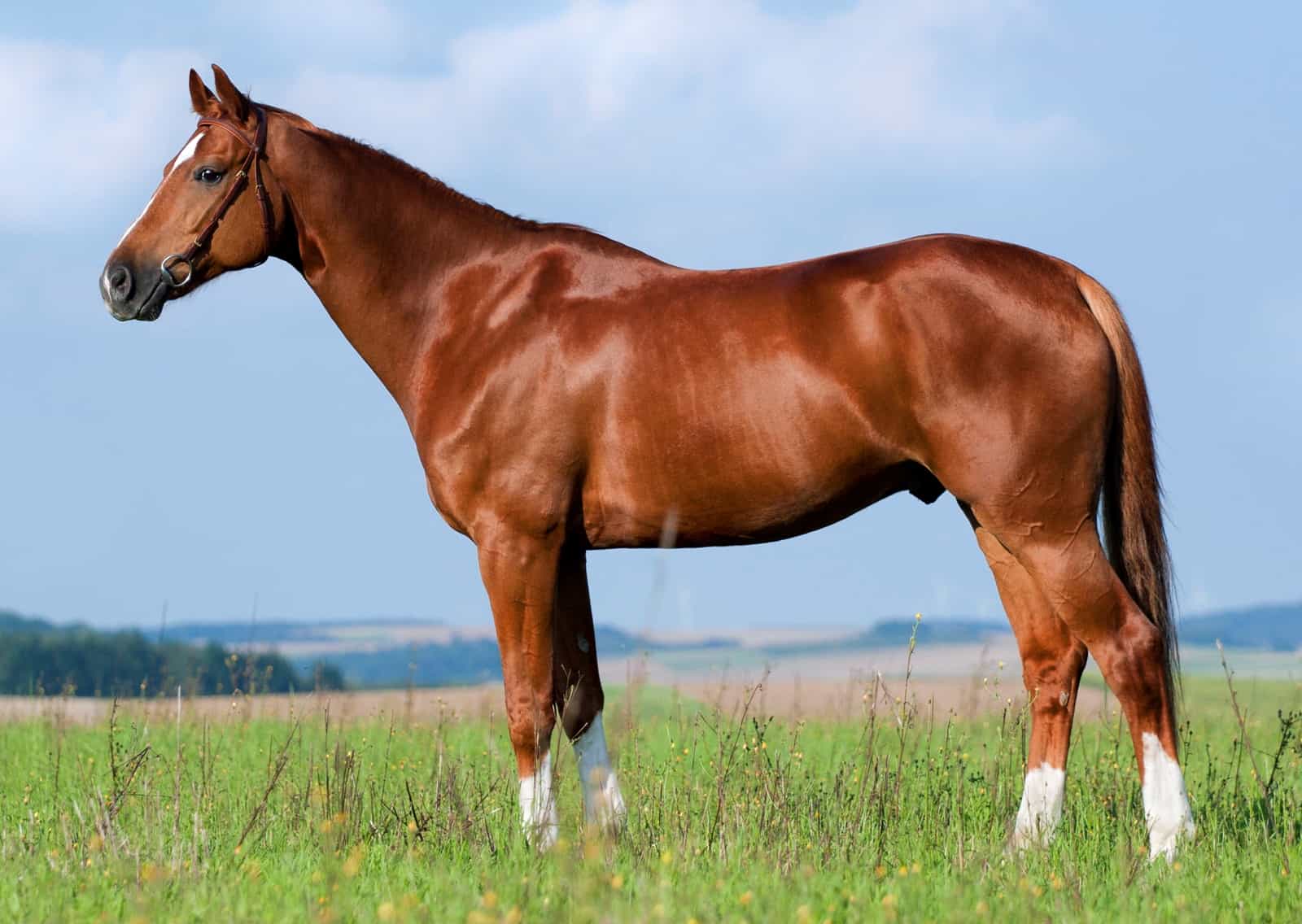
When you look at your horse’s conformation from the side, look at the silhouette of their back. This is their topline. This pattern varies from horse to horse.
This has a pronounced effect on how to measure a horse for a saddle. A horse with a level topline, where the wither and croup are on about the same level is the easiest to fit because the saddle will be balanced between the two.
If your horse is built “downhill”, aka when the haunches are higher than the withers, you may need extra padding on the withers to bring the saddle into balance.
If your horse has a swayback or a pronounced dip in between the withers and the haunches, the saddle can “bridge” the two.
This is not good because it puts more pressure on the front and back of the saddle and none on the center when the goal is to spread the weight evenly. This can be common in older horses or those without good conditioning. Use a bridge pad to help your horse be more comfortable.
Back Length
Back length should be taken into consideration for how to measure a horse for a saddle. Horses with shorter than average backs will need a saddle with shorter bars and skirts.
It may be worth your time looking at gaited saddles (although these may have higher than average gullets) or Haflinger saddles since those are made to accommodate horses with shorter backs.
Current Saddle Fit
If your current saddle is causing pressure points under the front of the saddle, you’ll want to look at the angle and width of the bar spread. If there are sores or white hairs forming, in general, something is not fitted properly.
Tree Size
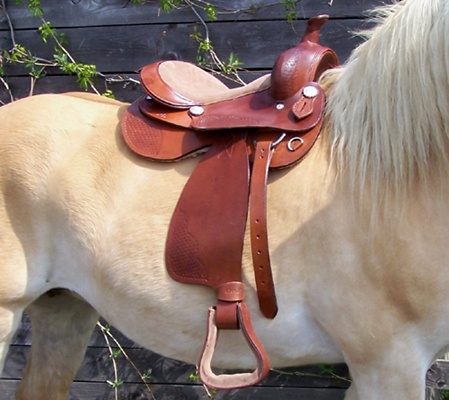
The tree is the base on which the rest of the saddle is built. Like its namesake, it holds its form. This structure is usually made out of wood or synthetic material with similar properties.
Since it holds its form, it is important to make sure the tree is properly fitted to your horse’s back.
How to Measure a Horse for a Saddle: Sizing by Breed and Bar Angle
You need to know the shape of the horse to know how to measure a horse for a saddle. Tree size can typically fall into a few categories based on the type of horse you are looking to fit a saddle to.
The Bar Angle is not typically considered when sizing a saddle, but it is integral to getting the best fit.
This is because saddle sizes are generalized by the average angle of the back. We have included the approximate degrees for the bar angle of each size. Double-check that these angles correspond to your horse.
Medium
The Medium tree size will typically fit horses with narrower withers and barrels.
A horse with a more refined body and defined wither will typically fall into the Medium/Regular tree size. These breeds include Arabians, Morgans, Thoroughbreds, Tennessee Walkers, Appendix Quarter Horses and Paso Finos.
The average Bar Angle for the Medium saddle size is 86 degrees.
Wide
The Wide tree size will typically fit horses with a more round barrel size. These horses have a flatter back and more rounded wither.
Their build is muscular and blocky, with a heavy neck. These breeds include most Quarter Horses, Paints, Mustangs, Rock Mountain Horses and Andalusians.
The average Bar Angle for the Wide saddle size is 90 degrees.
Extra Wide
The Extra Wide tree size is for the big fellas. These heavy horses will have a broad, flat back and there is not too much of a rise in the wither thanks to all that mass.
These breeds typically include Haflingers, Clydesdales, Fjords, Friesians, Foundation Quarter Horses and Percherons. If your horse is a draft horse, you’ll probably start here.
The average Bar Angle for the Extra-Wide saddle size is 94 degrees.
Other Factors
If you are doing performance events like barrel racing or are a larger rider, look into saddles with longer bars. This will help spread the pressure out evenly.
Bar Flare is also important if your horse needs more room to move around the saddle. A prime example would be that gaited horses typically need more Bar Flare.
In Conclusion
They say seven falls make a rider.
But we think that learning how to measure a horse for a saddle is a crucial part of becoming a rider and true equestrian.
So, learn how to measure a horse for a saddle, become a practitioner, and master all aspects of the horse world to truly become a rider!
By the way, do you own a high-withered horse that’s difficult to fit? You might also find this post helpful – Saddle Fitting High Withered Horses.
Did this post help you learn how to measure a horse for a saddle? Please leave your comments below.
Thank you for explaining how to measure for a saddle. My daughter wants a horse for Christmas. We’ll have to look into this so that she can get to riding it right away.
Hi Olivia. A horse saddle is a great Christmas gift. If it’s your first saddle, you may want to try one of our used saddles which are like new.
I am surprised that so much goes into choosing a saddle. This means that a saddle is really very specific to a persons weight and size. Kind of makes sense. I just always figured it would be like a small, medium, or large type of thing. Don’t my mother-in-law that or I will get an earful about saddles from her! LOL
Hi Leahrae. Thanks for your comment. Yes. So much goes into picking a saddle, and no one saddle size fits all. It’s so important to take into consideration the size of the horse’s back, it’s withers, they type of riding you plan on doing, and finally, your own height and weight. Many people don’t take these factors into consideration when buying a saddle. But these factors are so important. Thanks again for commenting.
Hi. I just came across another one of your educational posts! The information you have provided is very important. There are many riders who do not know what to consider when buying a saddle, or how to measure the horse for the saddle. This piece of writing is informative and educational. I did not know this information before. I am definitely going to spread the word to my peers out there.
Hi Kokontaia. Thanks for your comment. It’s really important to know the size of the horse’s back before trying to fit the horse with the saddle. So I write these kinds of posts so that before buying a saddle, the horse rider doesn’t waste their hard-earned money by buying the wrong size. Thanks for your post.
Hey Shalisha,
thank you for this great article. I really like how you point out the different methods on how to measure the horse for a saddle and give great visualization in combination. It seems like you have covered the most important aspects and went even further what is great if you are looking for the right saddle for your horse. My grandparents in russia have a lot of horses and I remember that the right saddle for the horse was crucial in order to have a comfortable ride for you and for the horse.
Thank you for the insights, I will definitely take notes of those tips.
All the best,
Sergej
Hi Sergej. Thanks for your comment and thanks for stopping by. Yes, there are different ways to measure a horse for a saddle. My goal is to educate as many people as possible about the importance of saddle fit. It looks like I have accomplished that based on your comment. Thanks again.
Hi Shalisha,
Man, this site takes me back, way back. I was raised on a farm and we had horses. I always loved them and enjoyed riding them. Feeding, watering, and maintaining them not so much. We weren’t the best off back then, most of the stuff we had was either used or hand-me-downs. Even if I had this kind of information I didn’t have the choice to get what I really needed.
I have learned so much from this site about sizing saddles that I have never known. I think what you have done here is great and will help people who are looking to saddle a horse. I think it will be helpful even to those who have experience with horses. Even explaining the different parts of a saddle and the purpose for them, how they are made. All very helpful information.
Makes me miss riding!
Thanks,
Chad
Hi there! Thank you so much for your comment. I’m so happy the information I provide on my site is helpful to you and many others. So many people own horses, ride them and work on farms with horses, but many don’t understand how important it is to understand the different parts of the saddle and their functions.
So they end up buying saddles that don’t fit the horse well – which results in a horse that’s in pain. My site aims to help horseback riders and horse owners pick saddles that fit them and the horse comfortably. Thanks again for stopping by.
Hello Shalisha,
Excellent post and very informative. As someone who has literally zero experience with horse riding and horses in general, this was pretty eye opening! For example, knowing that a horse saddle could affect the horse’s behavior. Also, I didn’t know that there were so many different types of saddles and the little details that a rider needs to know about in regards to the saddles. Great job on explaining the difference in the breed size and how to find the right saddle for them.
Hi Jerry. Thanks for commenting. Yes! It’s so important to understand that there are different saddle types for a reason. The #1 problem for horseback rider’s is that they don’t buy the right type or size saddle. So both horse and rider suffer. I’m glad my website helps riders pick saddles that are right for both rider and horse.
Hello, I just love horses, but the saddle I just thought that you have 2 choices from the big and medium-size, and people would just go for the look! This a good article to make sure that you get a good saddle for your horse. Thank you for sharing theses advice with us.
Lyne
Hi Lyne. I tend to show only 2-3 saddles per post as it would be too overwhelming to showcase more. But rest assured, there are smaller and narrower horse saddles for those that need them. Thanks for stopping by.