
How to clean a western saddle, if you own one, is something you definitely need to know. Without proper care, normal wear and tear from use, and the environment it’s kept in, your leather saddle will degrade.
And if you ignore your saddle too long, it will eventually reach a point where cleaning and conditioning won’t be able to salvage it. So, when you’re tempted to put your mud-splattered, sweat-stained saddle back on the rack and leave the barn, don’t.
It won’t take a lot of time to clean off the grime. When cleaned regularly, doing so will add years to the life of your saddle. So here are some tips on how to clean your Western Saddle.
Reasons for Regular Cleaning
It’s worth the time and nominal cost to keep leather clean and conditioned. You want to take care of your saddle because:
- A good saddle is an investment. Quality saddles aren’t inexpensive. You’ll want to protect your investment.
- Your saddle will last many years.
- A well cared for saddle will retain value.
- Cleaning and maintaining will keep a saddle safe to use. Cracked leather is dangerous and cannot be restored.
When Should You Clean
It depends on how frequently you ride and the conditions.
If you only ride under optimal conditions and you’re riding once a week, you should clean your saddle every month. Two months at the most. But when riding more often, you’ll want to clean your saddle each week.
However, other factors will make cleaning your saddle necessary.
- If you get mud on your saddle, remove it immediately with a damp (not wet) towel.
- Horse sweat is damaging to leather. Never leave sweat on your saddle. Clean it right away.
- If your saddle gets wet (rain or crossing a body of water), clean it immediately. Water may mark the leather if it isn’t cleaned. Allow it to air-dry (drying time will depend on how wet the saddle got).
When the leather is almost dry, apply a small amount of conditioner. The leather will need to be completely dry before you can thoroughly condition it.
- Clean immediately if you find mold (a white or greenish powder) on your saddle. To clean off mold, mix one part rubbing alcohol and one part water. Then wipe mold off the leather. You’ll want to condition after cleaning because rubbing alcohol is drying to leather.
- Clean and condition if the leather becomes dry. If a saddle becomes dry and isn’t cared for it will eventually crack. Cracked leather is dangerous and should never be used. It can’t be repaired and should be replaced immediately.
Additionally, clean your saddle if you’re going to:
- Sell it
- Compete in it
- Put it in storage
Supplies You’ll Need

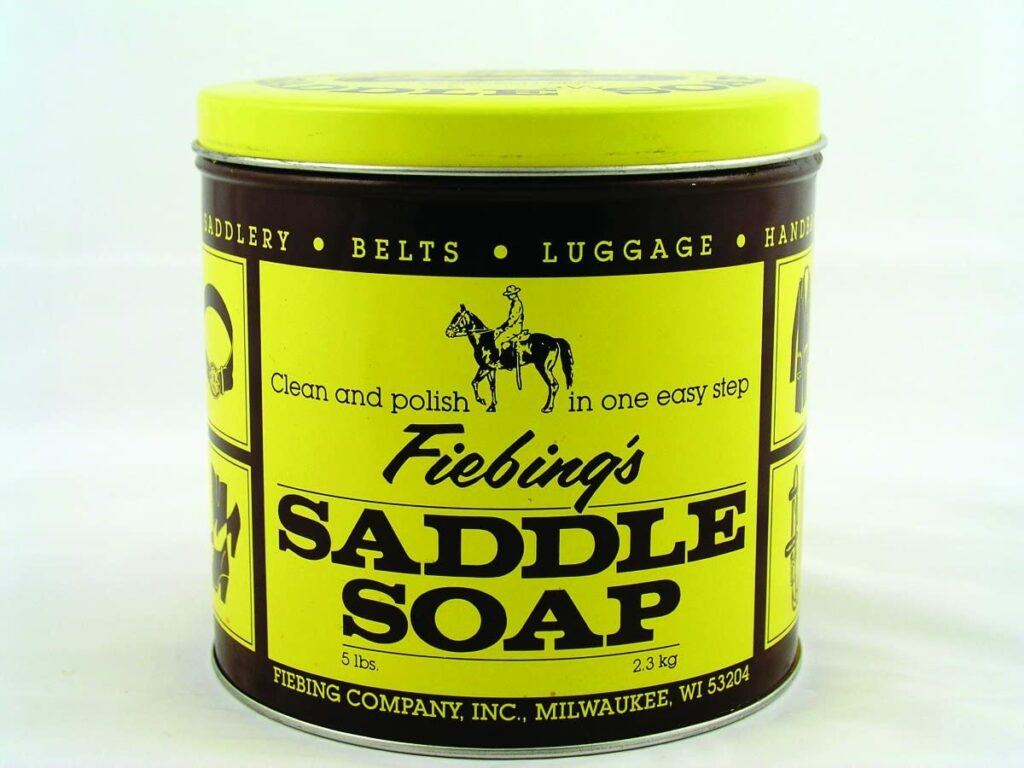
- Saddle soap – the best is glycerin-based and retains moisture. Saddle soap can be a liquid or paste. Paste can fill crevices, requiring a toothbrush or cotton swabs to remove it.
- A small bucket (or other container) for warm water.
- Make sure they aren’t abrasive.
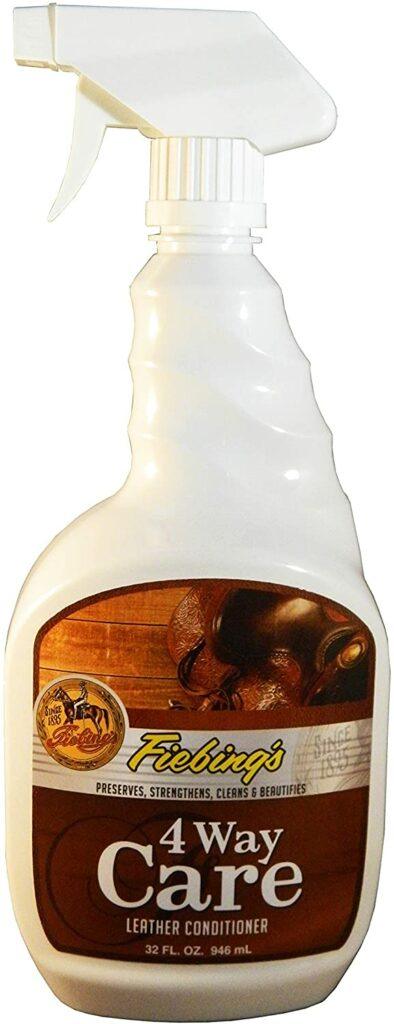
- Leather conditioner – when needed. Do not over condition. Leather can lose rigidity when over conditioned. Use it sparingly. Lanolin, a product of sheep’s wool is a waterproof moisturizer. Neatsfoot oil can also be used before conditioning, but some leather can darken, so be aware of that possibility, and make sure it doesn’t contain mineral oil, which is not good for a saddle. Neatsfoot oil should be pure and not an oil blend. After oiling and the leather has dried, then use a conditioner.
- Soft towels (3 or 4).
- A still bristle brush
- Toothbrush for hard to reach spots.
Cotton swabs (optional)
How To Clean A Western Saddle Tip #1
If you have an air compressor, you can blow out dust and grit from hard to reach places. When grit is left between pieces of leather, it will rub and cause damage. You want to get as much of it out as possible.
Use a brush to clean any fabric parts.
Suede can be refreshed with a stiff brush. Don’t do this too often or with too much force as you will damage the suede. If it doesn’t come clean, you can use a suede cleaner.
How To Clean A Western Saddle Tip #2
Remove any mud accumulated around stirrups. Use a stiff brush to remove as much as you can. You may have to scrape some of it off.
Dampen a towel, make sure it isn’t too wet. You don’t want to get the leather wet. And wipe off the saddle. Don’t skip this step even if it looks clean. You don’t want to grind gritty dust particles into the leather.
Note, always read and follow all directions on cleaning products you aren’t familiar with.
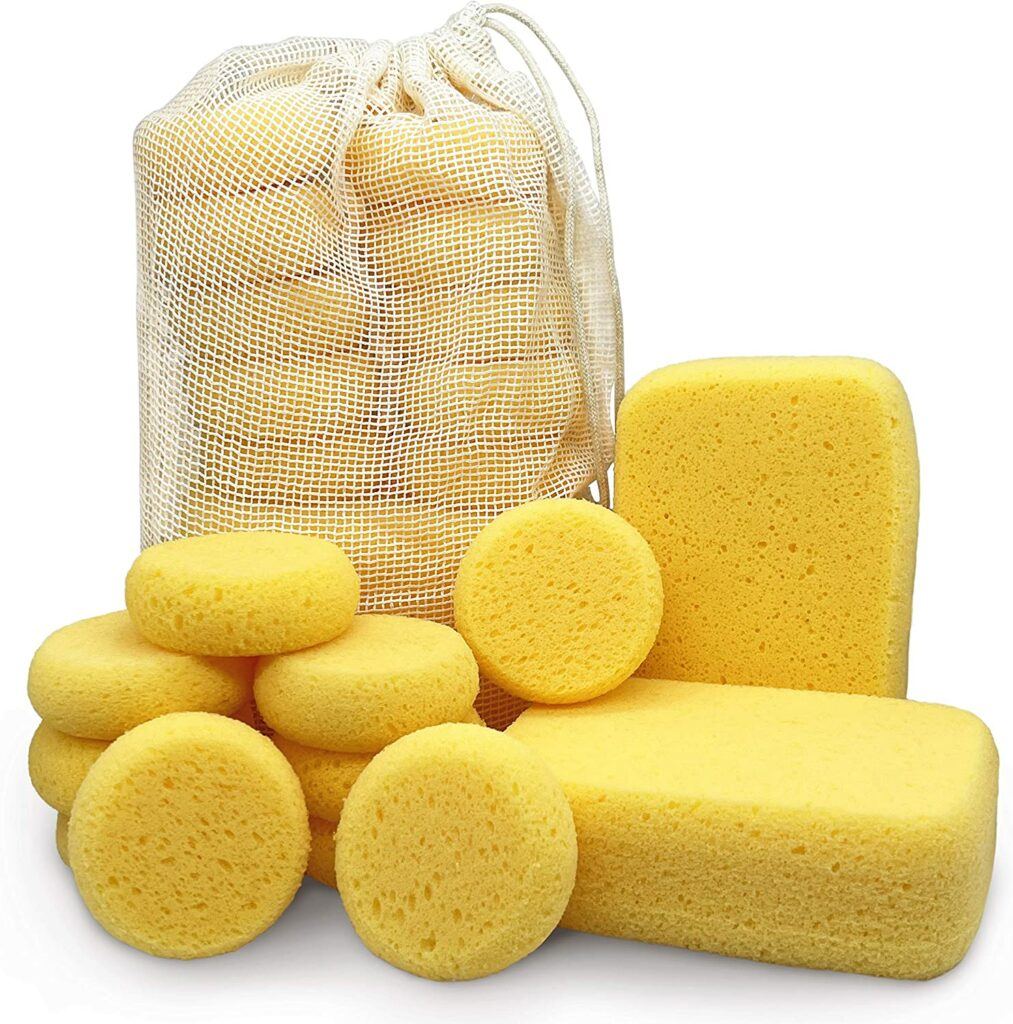
Take a damp sponge and work up a lather with the saddle soap. If this is the first time you’re going to clean the saddle, try the soap in an inconspicuous spot. Some cleaners, especially all-in-one cleaners, can change the leather’s color.
How To Clean A Western Saddle Tip #3
Clean leather with small circular motions. Rinse the sponge often and re-lather. Change the water frequently. You can’t clean something by putting dirt back on it.
Start with the seat and work your way down to the stirrups. Clean all leather parts. Make sure you clean beneath flaps and all parts of stirrup leather.
If the stirrups are covered in rawhide, you’ll need to use a rawhide cream to clean and condition them. Never get oil on rawhide.
How To Clean A Western Saddle Tip #4
Once you finish cleaning, make sure you don’t leave any residue on your saddle. Clean off any remaining soap with a damp towel.
Use a toothbrush or cotton swabs to remove soap from crevices or tooling if it doesn’t wipe out.
Some More Tips…
When all of the leather has been cleaned and no residue remains, wipe it down with a dry towel.
Clean any conchos on your saddle. If they’re so tarnished they need polish, you’ll have to take them off the saddle. Never get silver polish on your saddle. It will remove the color from the leather.
Make sure to clean the girth. Pick out anything that has become lodged in it and brush off mud.
Don’t Over Oil Your Saddle
Oiling shouldn’t be overdone. Don’t do it more than once or twice a month. Too much oil will saturate and damage leather. Make sure the leather is dry. Use a light coat of oil. Only use products that are not made of animal or vegetable oil.
Those can get on the stitching and turn rancid – which may rot the stitching.
Don’t Over Condition Your Saddle
You won’t need to condition as frequently as cleaning. You will need to condition more often in dryer climates. Conditioners work best if the leather is slightly damp. Don’t use too much. An excess can result in the conditioner soaking all the way through the leather and causing damage.
Don’t leave residue from the conditioner. Buff with a clean towel until no residue remains.
Brush the Underside Fleece
Brush the underside fleece…but be gentle. Don’t rip stiff bristles through the fleece, or you may damage it. You just want to remove any debris caught it in and fluff it a tad. Fleece should be handled with care.
Important Points to Remember
- Always let saddles air dry. This is super important. Don’t dry a saddle in direct sunlight or with a heat source (such as a heater or hair dryer). Saddles placed in direct sun or next to heaters can become unsafe to use.
- Leather needs to breathe. Only use products made specifically to clean leather. You don’t want to clog the pores.
- Pick an all-in-one cleaner and conditioner with care. Some can damage leather over time. Some may discolor leather. Always test for color-fastness in an inconspicuous place.
- Don’t stack saddles. Store each one on a rack. Saddles are best kept in a climate controlled environment. Leather exposed to excessive moisture can mold. Leather stored in too much heat can crack.
Conclusion
Cleaning and conditioning your saddle is the most important thing you can do to keep it in great shape.
No matter what type of riding you use your saddle for, maintaining it will keep it looking good and you won’t have to worry that it has become degraded and is no longer safe to use.
Regular care is a simple way to ensure the saddle you wanted, and paid good money for, will serve you well for many years to come. Would you like tips on how to navigate wintery trails? Read my post, How to Dodge These Scary Winter Horse Trail Riding Hazards.
Was this post helpful to you? If so, please leave your comments below. I love hearing from my readers!
Hi Shalisha,
You raise some great points about the need to clean and care for your leather western saddle. As you say if it is neglected then cracked leather cannot be restored and is also dangerous.
For such an investment in a quality western saddle it makes perfect sense to care for it as you have suggested. Air blower and the saddle soap and care products you recommend.
When I invest in a quality horse saddle I will certainly be following your cleaning and care tips to ensure the quality of my saddle is maintained for long term riding and for retaining its value.
Hi John. Thanks for your comment. Yes, a cracked saddle is dangerous for both rider and horse. And since saddles are expensive, caring for them in the proper manner is very important. I’m so glad you found this helpful.
A good saddle is expensive and can last for many many years if looked after properly. We used to rub dubbin into our saddles when I was working with horses on high country farms. It seemed to do the job of maintaining them, but I realize now that there are much better products available that will do a much better job.
There is nothing worse than having to sit on a dried-out cracked leather saddle for a couple of days when mustering the livestock, so looking after them is in a way looking after ourselves.
Thanks for sharing.
Hi Andrew. Thanks for your feedback. Yes, the worse thing you can do is to use a cracked, dried out saddle. A cracked saddle digs into the horse’s back, injuring it. Horse’s suffer in silence. So please – never use a cracked saddle. Dubbin, as I understand it, is a wax product used to soften, condition and waterproof leather and other materials. It consists of natural wax, oil and tallow. Dubbin has been used since medieval times to waterproof and soften leather boots. I’m not really familiar with this product nor how it affects a leather saddle. Anyway, I’m glad you enjoyed my post.
Thank you for your educational post. I wasn’t aware that you shouldn’t clean the leather saddle with a wet towel. Is there any other reason rather than the stains that, the water might leave? I think it make sense to first clean the saddle properly before using it the other time, do you have any specific tips how to dry air it quickly? Thanks in advance, enjoying your posts
Hi Julius. Thanks so much for your questions. You can use a lightly wet towel to remove dirt, dust, hair, mud, and anything else that may have collected on the saddle. Leather saddles generally do pretty well as long as they aren’t completely soaked.
Unfortunately, when a saddle gets soaked in water, the fibers become permanently weakened when they swell too much. In addition to weakening the leather, water exposure also ultimately causes your leather to shrink and crack over time since leather’s structure changes and does not dry to its original full shape after being wet. You should follow up any cleaning with some light oiling and conditioning so that your saddle doesn’t dry out.
As for the quickest way to air dry your saddle: You don’t air dry your saddle quickly. Never put rain-soaked tack out in direct sunlight or in a heated room to dry – this can speed the drying process too much, leaving the leather warped, brittle, and cracked. Instead, leave your tack in a room, ideally with a dehumidifier, and allow it to dry slowly. I hope this helps.
Thanks for sharing this helpful information. I have noticed a couple of items that have developed cracks in the leather during long periods of inactivity (storage), and I want to avoid that with costly saddles. I appreciate the smart tips and the product recommendations. Thanks so much for helping to protect this investment!
Hi Aly. Thanks for your comment. Yes, just because a saddle isn’t in use, doesn’t mean it doesn’t need the occasional oiling and conditioning. And by all means, you really want to avoid having to spend more money on a saddle because of dried out leather and saddle cracks! So glad my post was helpful to you. Please stop by again.
When I rode horses at the local stable in my youth, they always told us that we had to clean our saddles, and they taught us how to do it. It’s a long time ago, I don’t remember it very well, so your tips are a nice refresher. I just wonder if I can use the same cleaning products if the saddle is not made of leather?
Hi Christine. Thanks so much for you comment and question. It’s always best to read the product label to ensure that what you’re using is good for both leather and/or synthetic. The particular product I recommended in my post, Fiebing’s Glycerine Liquid Soap says specifically for leather. So only use this for leather saddles.
What I particularly like about this product is that you simply spray on and wipe off, and there is no leftover residue. Thanks for your question, and come again.
Saddles are hellishly expensive so it makes good sense to take care of them so that they last you for years to come. As I child I hated having to rub Dubin into my saddle every month, but it saved my parents having to get me a new saddle as that one lasted for years. Besides, it is no fun riding on cracked leather.
I don’t remember having access to saddle shampoo when growing up, and I see you say only to oil the saddle twice a year or so. I did it much more, than that, but didn’t do the cleaning thing every week.
Hi Michel. Thanks so much for you comment. Yes, as a kid, washing a saddle was no fun, I’m sure. But the rewards were worth it. You got to keep your saddle for several years! I’m sure that made your parents happy. I’m sure I didn’t say oil the saddle only once a year. LOL. Gotta read that one again.
Wow! I’m impressed with this article. You really know your stuff. Although I love horses, I do not have one – always thought of them as unaffordable luxury. But, maybe one day, I will have the pleasure. I know someone who takes her daughter for horse lessons and will share your post in case they do have a saddle.
Hi there Milionaria. Thank you so much for your comment. Yes, horseback riding is a luxury. It’s one of those disposable income kind of pleasure. Yes, by all means, please share this with your friend. Her daughter is going to need to learn how to take care of her saddle. Have a wonderful day!
Hi Shalisha! Thank you so much for writing this helpful article about how to clean a western saddle. While I do not personally have a horse, I know several friends and family who do, and they would find this information very helpful. This product seems super helpful and easy to use. I will definitely share your recommendation with them!
Hi Erica. Thanks so much for your feedback! I’m so happy that my article is helpful and useful. By all means, please do share this with family and friends. Have a wonderful day.
Hey great post! It’s really useful for those who enjoy riding a horse.
My friend takes riding classes and recently purchased a saddle as she is planning on riding her own horse which she has had for just over 3 years, but hasn’t rode due to her inexperience. As she is going to be riding real soon I think she’ll definitely find this interesting! Definitely be sharing this with her!
Hi Sariyah. Thanks for visiting and thanks for your comment! I’m happy you found my post helpful to you. Please feel free to pass it on. There’s lots of good stuff on here. Do come by again.
I was looking for a guide on how to clean my western saddle after riding weekly. Did not want my saddle to show wear after riding in snow and mud as it was a good investment. Going to have to purchase the supplies you suggested in your guide. Thanks for sharing these tips with your readers.
Hi Jannette! Thank you for your comment and feedback. Yes, it’s so important to clean your saddle. Not daily necessarily, but certainly you don’t want to skip this. You’ve spent a lot of money on your saddle. So you must invest in your investment. If there’s anything else I can help you with, or recommend, please let me know.