
As a new rider interested in any of the Western riding disciplines, it’s natural for you to want to understand the different Western horse saddle parts and their function.
In fact, depending on the riding discipline, each part of the saddle plays a critical role in terms of how the saddle is supposed to function.
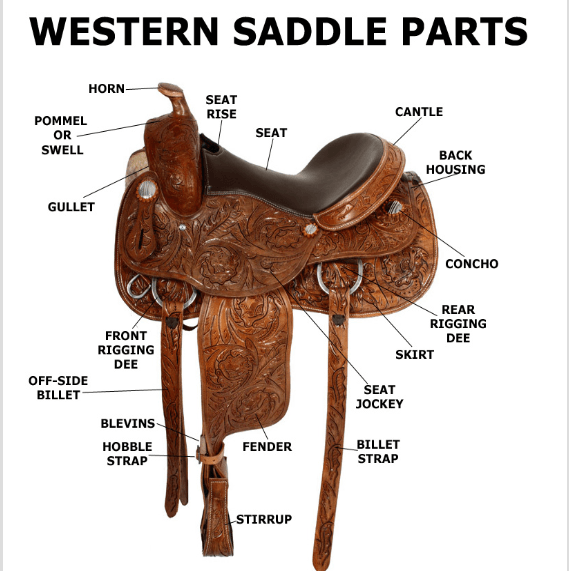
Knowing the different parts of a Western saddle will enable you to determine the correct saddle size you need and will teach you how to tell the different types of western saddles apart.
In this post, I’ll explain to you the basic Western horse saddle parts and their function so that when you go saddle shopping, you’ll know which saddle is right for you.
It All Starts With The Tree
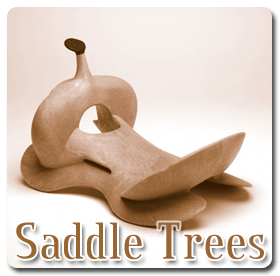
Nothing is more important to Western horse saddle parts than the tree. The foundation of a saddle begins with the tree. The tree is the frame upon which everything else is built.

More importantly, the tree greatly contributes to the saddle’s safety and longevity. If you have a poor-quality tree, you’ll have a poor-quality saddle.
Wooden Trees or Synthetic?
Many traditional saddles are made of wood. High-quality wood, such as Western pine or lodgepole pine, is the best wood to use. It allows for a slight amount of give or flexibility to the saddle when the horse moves and won’t break easily – even in vigorous events like roping.
But… and this is a big BUT…
There are other synthetic materials used for trees that are strong. And there are costs and benefits to both wooden and synthetic trees. I’ll talk about those later.
What’s The Goal of a Saddle Tree?
The goal of a saddle tree is to equally distribute the rider’s weight across a horse’s back, so as to avoid pressure points and provide comfort to the horse. In this regard, the bars of the tree play a major role.
The 5 Parts of a Saddle Tree

The 5 basic parts of the tree are the 2 bars (which run parallel and are the parts of the saddle that most directly impact the horse), a fork, which holds the bars together from the front, the cantle, which holds the bars together at the back, and the horn.
Like I mentioned earlier, there are different types of tree material. And no Western horse saddle parts article would be thorough without first explaining the importance of the various tree materials used.
Different Types of Tree Material

Saddle trees are made of either wood or synthetic material, like plastic, fiberglass, or Ralide. The better quality wooden saddles are made of wood and covered in rawhide.
A bull hide covered tree is considered the top of line when it comes to saddle trees.
Fiberglass Trees – Are They Any Good?
With fiberglass trees, the wood is dipped in fiberglass. Fiberglass is tough and makes for a very rigid tree. But because of its rigidity, fiberglass trees can get stress fractures after 2-3 years.

However, with the advancement of technology, a lot more saddle types (roping and reining) are making good use of fiberglass and are lasting long.
Plastic Trees – The Pros and Cons
People get bent out of shape when they hear products are made of plastic. I know. The environment! But, plastic trees make for a lightweight saddle as they’re lighter than wood.
Plastic trees are excellent for long trail and endurance saddles. The drawback is that as plastic ages, it turns brittle and cracks in as few as 7 years.
Once cracked, plastic can’t be repaired. Also, plastics can’t hold nails, staples or screws well.
Ralide Saddle Trees
The newest material in saddle trees is called Ralide, a synthetic material. Ralide is considered to be a very strong and durable material and the best out of all of the synthetics.
Ralide is not as flexible as wood, and they’re made with molds, which means the trees are cookie cutter. They don’t hold nails or screws.
The good news is that you don’t have to worry about splitting, warping, rotting or mildew-like you do with wooden saddle trees. Ralide makes trees for every riding discipline such as Barrel Racing, Roping, and Trail Riding.
Now, getting back to the different parts of a saddle…
The Fork (Swell)
The fork is an important part of the saddle tree as it connects the two bars, which run parallel, at the front. The fork is also known as the swell.

The Gullet
The gullet is one of the most important parts of the saddle. The gullet is the tunnel underneath the fork. It protects the horse’s withers. If the gullet is too low, it hits the horse’s withers, causing extreme pain.
When buying a saddle, it’s so important that you understand the importance of the horse’s withers in relation to gullet height.

Horse’s with long withers are more commonly seen in Thoroughbreds, Saddlebreds and Tennessee Walkers and can have a saddle fitting problem.
Make sure the gullet fit is the right height and width with these horses.
Gullet Channel – Protection For the Horse’s Spine
The open space between the tree bars is called the gullet channel. This too is a very important aspect of the saddle. The gullet channel keeps the saddle tree clear of the horse’s spine.
The Saddle Horn – Decorative or Functional?
The horn is firmly attached to the fork. It’s usually metal, but some can be wooden and are attached with screws and glue (except in cases where the material is made of synthetic).
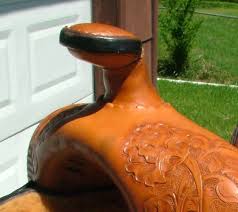
The horn’s sturdiness is reinforced by covering it with rawhide to anchor it in place. The horn’s function is different depending upon the riding discipline, like rodeo events such as roping or pleasure riding.
The Role of The Horn in Rodeo Events
If you’re involved in a rodeo event such as roping, the strength and stability of the horn is crucial. But for saddles that are used in other Western sports, or for pleasure riding, the horn is just decorative and only used to help stabilize the rider.

The Role of The Horn in Reining Saddles
Now, let’s look at the role of the horn in a reining saddle. If you’re engaged in the Western sport of reining, the saddle will have a lower horn and pommel so as to not hinder the movements of the rein.
The Ground Seat
The ground seat is the area between the fork and the cantle. It covers the seat strainer. The width and shape of the seat determine the rider’s comfort in the hip and pubic area. It also determines the functionality of the seat within different Western riding disciplines.
Saddle Seat By Discipline
Depending on the discipline, a saddle’s seat slope varies. Depending on the riding discipline, the seat will be deep, flat, or somewhere in the middle.
Barrel Racing – Barrel saddles have deep seats and higher cantles as this discipline requires a lot of twisting and turning of the horse and needs to keep the rider in the seat.
Saddle seats can be covered in leather or suede. The suede gives extra grip and keeps the rider in the seat.
Reining –
In a reining sadd le, the seat will have a flatter seat for better hip movement. In this discipline, the rider needs to sit low on the horse’s back and is shaped to allow the rider to roll their pelvis back for the big stops the horse makes.
The Cantle
The cantle supports the back of the seat and connects the bars together at the back, stabilizing the tree. A lower cantle allows you to dismount your horse quickly during roping.
However, if you’re barrel racing, you’ll need a seat where the cantle is higher to support your back and keep you in your seat as your horse is twisting and turning in a cloverleaf pattern.
The Jockeys
This part of the saddle covers the exposed parts of the saddle and protects the rider’s leg and gives the saddle a finished look. There are front, back and side jockeys.
Skirts
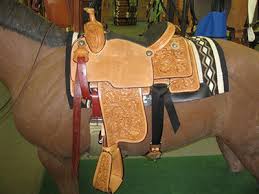
The saddle skirts’ function is to protect the horse’s back from direct pressure from the tree bars. The skirts also help to stabilize the saddle and equally distribute the rider’s weight over as large an area as possible.
Rider-horse communication is important. When looking for a saddle, you should look for a close contact saddle with skirts that allow good rider-horse communication through cues – like reining and training saddles.
Fenders
The fenders protect the rider’s legs from the horse’s sweat. They go between the stirrup leathers and the rider’s legs.
Stirrup & Stirrup Leathers
 The stirrup is the triangular piece where the rider rests his feet while riding. The purpose of the stirrups is to give support for the rider’s legs and help the rider hold proper riding position.
The stirrup leathers hold the stirrups in place. They’re made with heavy leather.
Recap of The Western Horse Saddle Parts
In sum, although all Western horse saddle parts are important to the saddle as a whole, I’d say the 9 parts that impact the saddle the most are (not in any particular order) the tree, as this is the foundation, and the bars of the tree, as they distribute the weight of the rider over the horse.
In addition, the horn has a unique safety role. It’s definitely an important feature of a Western saddle. The sturdiness of it in certain rodeo events can make the difference between life and death.

The gullet plays a role in the comfort of the horse in that its role is to protect the horse’s withers. Remember, if the gullet is not high enough, it will contact the withers, causing the horse extreme pain.
Next, I believe the gullet channel is super important because of its importance in protecting the horse’s spine.
Lastly, the cantle, the seat, the jockey and the skirts all play equally important roles to the functionality, safety, comfort to the rider and the horse.
If I’ve missed anything, I’ll put it in my next post. Was this post helpful? I’d love to hear your feedback. Please leave your comments in the comments box.
Some saddles have an extra flap of leather under the fender and on top of the front rigging. My full double rigged saddle doesn’t have this, but my riding partners saddle, which has it’s front rigging on the tree and the flank cinch in the skirt, does. I am currently trying to find a used western saddle with this extra protection because I have long legs and my fenders begin to narrow at the top end, allowing the flesh inside my knee to become pinched between the the narrowing fender and the cinch strap/rigging. It’s maddening! And painful! What is this extra flap that covers the front rigging called? Does a specific type of saddle have it?
Hi Shelly. Thanks for your question. Yes, that sounds incredibly painful. What I think you’re looking for is this: Circle Y Julie Goodnight Monarch Saddle 1752 w/Free Pad. If this did not answer your question, after you click on the link, go to the chat feature, and one of our live representatives will help you. But I think this is what you you’re looking for.
https://www.horsesaddleshop.com/monarch-arena-cicle-y-.html
I am considering buying a saddle with a plastic tree. I mostly do pleasure riding and trail riding. Maybe a little bit of reining but not much. The company has a 5 year warranty on the tree, so that gives me faith. Is there any particular reason to not purchase a new saddle with a plastic tree? It is more likely to snap if the horse were to come down on it hard? I want to make sure I’m being safe and smart, not just buying a saddle because I like the fact that it’s lightweight and not as expensive. Thank you!
Hi Crystal. Thanks so much for your question. Plastic saddle trees are much lighter than wood trees. This type of tree is perfect for long trail and endurance. However, after about 7 years, it can turn brittle and crack. Once cracked, it can’t be repaired. Additionally, it can’t hold nails, staples or screws well.
Fiberglass is tough and rigid, so fiberglass saddle trees can get stress fractures after using 2-3 years. However, nowadays many fiberglass trees are long-lasting thanks to the advancement of technology.
Your best bet is to get a wooden tree saddle that’s covered in rawhide. That will last for many years.
I had no idea so many components went into a saddle! I found this to be so interesting!
I think it would make a great project for the kids and I to learn about on one of our summer camp days. Possibly before going horse back riding!
Thanks so much for the great article!
Hi Brianne. Thanks for your comment. Yes. So much detail goes into making horse saddles. That would be great if you and the kids did that.
Very interesting information. I’ve learned so many things about saddles. I had no idea there was so much to learn about them. Awesome content!
@Nick: I’m so glad you enjoyed it. Thanks for commenting, and keep coming back.
@Matts Mom: Yes, there is a lot that goes into picking a saddle, as all saddles are different and there’s no industry-wide standard.
@Andrew. No, the fiberglass doesn’t hurt the horse. Fiberglass actually has some “give” to it.
The deciding factors that hurt the horse’s back are if the bars are too long and not angled right, and the gullet is touching the withers. Thanks for commenting.
This is an amazing read! I have always ridden on wood/rawhide saddles- I never knew there were fiberglass molds for saddles but that intrigues me so much. Do those type of mold hurt the horse? They sound durable, but I imagine the 2-3 year life expectance is accurate as weather effects fiberglass quite a bit. Great post!
I have a friend who is a barrel racer, and now I can feel a little more informed when I head out to help her with the horses. There was a ton of great information here! Thanks so much for putting all this together.
@Matts Mom: Thank you for reading and commenting. Your friend, the barrel racer, must have a ton of fun riding in a cloverleaf pattern! I’m glad you enjoy my site.
Never knew there was so much that went into a horse saddle! LOL. Great and informative article! I’ll definitely keep coming back! Have a great day!
@Maryann Breece: Hi there. Thanks for your comment. Most people don’t, and the horse is the one that suffers. So glad you enjoyed it.
Excellent information. I never knew there were so many parts to a saddle. It is amazing how important each part is in the overall fit and comfort for both the horse and rider. thank you for sharing this information.
@Donnie: Thank you. Unfortunately, many horse riders don’t understand the importance of saddle fit. I’m glad you’ll inform them.
Shalisha, if I may, I did not know so much went into designing and maintaining the saddle. After reading this article I have more things to see and question the next time I am around my friends pasture where his father has a boarding stable. This was a very informative article and laid to hold your attention. I can’t say that I would have presented in any other manner.