
If you’ve got a horse with a short back, finding a western saddle that actually fits can feel like searching for a needle in a haystack. I’ve helped a lot of riders troubleshoot saddle problems over the years, and I know just how tricky it can get.
Before I continue, here’s a little transparency:
Some links on this website are affiliate links. If you choose to make a purchase through them, I may earn a small commission at no additional cost to you. This helps support HorseSaddleComparison.com and allows me to continue providing honest Western saddle reviews and comparisons.
Okay… let’s continue.
I’m going to help you out here. I’ll give you short backed horse saddle solutions in this post.
There’s a lot more to fitting a saddle to a short backed horse than just measuring the length, and the wrong fit can lead to sore backs, unhappy horses, and some pretty rough rides.
Here’s everything you want to know about short backed horse saddle solutions, and how to save yourself (and your horse) a lot of hassle.
What Does “Short-Backed” Mean?
A short backed horse has less space between the withers and the loins, which is usually easy to spot once you get your eye in. Breeds like Arabians, Morgans, and some Quarter Horses are known for their compact builds.
But even within larger breeds, you’ll find plenty with shorter-than-average backs. Less real estate for the saddle means you’ve got to pay extra attention to tree length, skirt shape, and how the saddle sits on the horse.
Generally speaking, a horse whose back length (measured from the rear of the scapula to the last rib) is noticeably less than the average for its breed might be considered short backed.
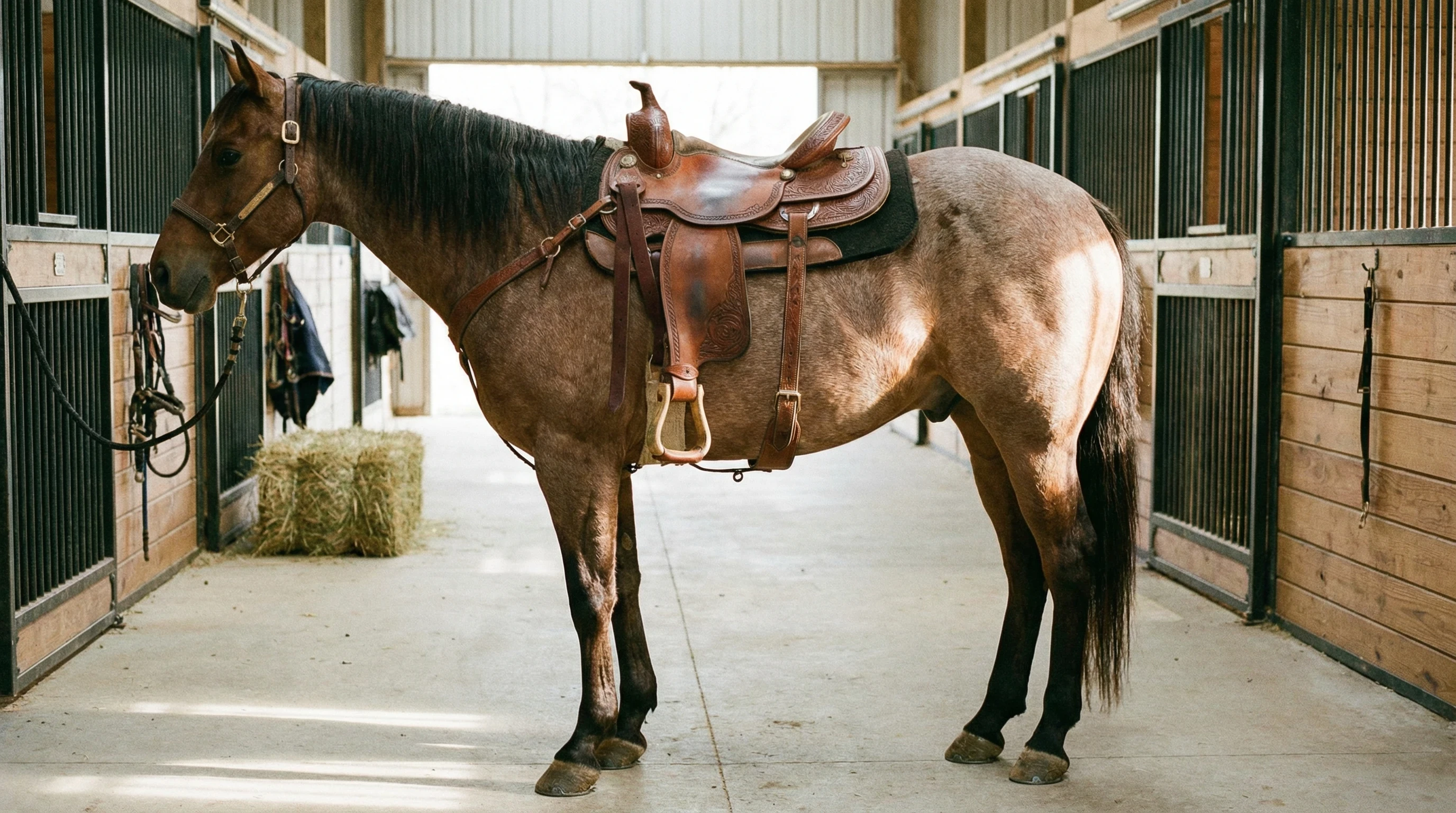
This isn’t just about looks. Shorter backs affect weight distribution and comfort during rides, especially with a bulkier western saddle in the mix.
Horses with shorter backs often carry their riders’ weight more centrally, which can either help or create challenges, depending on how the saddle’s built. If the saddle doesn’t line up with those natural loadbearing zones, the horse may develop soreness or bad habits to compensate.
Over time, improper weight placement can lead to muscle atrophy or even swayback issues, so it’s important to understand what you’re working with from the start.
Common Fit Problems with Short-Backed Horses
Western saddles tend to be designed for wider, longerbacked horses. On a shortback, standard models often lead to a few predictable issues:
- Poking Past the Last Rib: Skirts that extend beyond the last rib can dig in, causing soreness or interfering with hip movement.
- Bridging: The saddle sits up at the front and back, but doesn’t make even contact along the middle, causing pressure points.
- Pinching or Rocking: Because the saddle doesn’t match the horse’s back shape, it can shift or create hot spots.
- Extra Bulk and Weight: Large skirts (especially square cuts) add unnecessary weight and can feel clunky or get in the way.
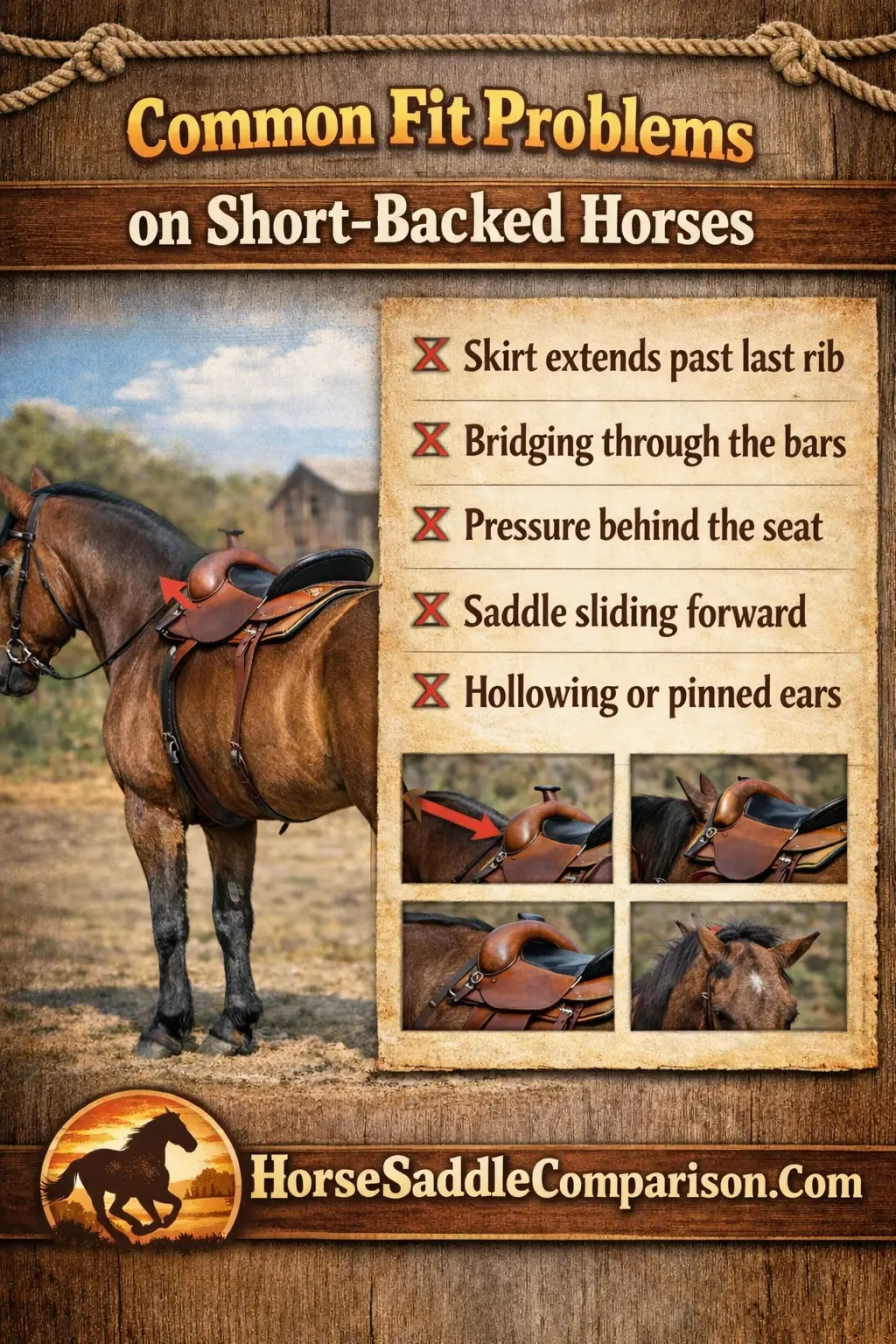
Horses react to these issues in different ways: you might notice an unwillingness to move out, hollowing of the back under saddle, difficulty bending, or even crankiness when tacking up.
Over time, some horses become sensitive to saddling; you might see tail swishing, ear pinning, or even body soreness unrelated to riding effort. These are clues that the saddle setup needs some real attention.
Why Most Standard Western Saddles Don’t Work
Traditional western saddles have long skirts and trees designed to spread weight over a larger area. While that’s fine for big, long backed horses, it just doesn’t line up with the conformation of a shorter back.
The extra length causes the saddle to bridge, rock, or poke over the loins. Even if the tree width is right, the shape and length still matter a lot.
A lot of off-the-rack western saddles come with square skirts and bulky fenders that only add to the problem.
These designs also make the saddle heavier, which shortbacked horses tend to find uncomfortable. This extra weight and bulk can tire a horse out faster, make it harder for them to move freely, or even put you off balance as a rider.
Remember, proper Western saddle fit is important. And a heavy, ill-fitting saddle not only feels bad for the horse but can also throw off your own seat and make cues less effective during technical riding or long hours on the trail.
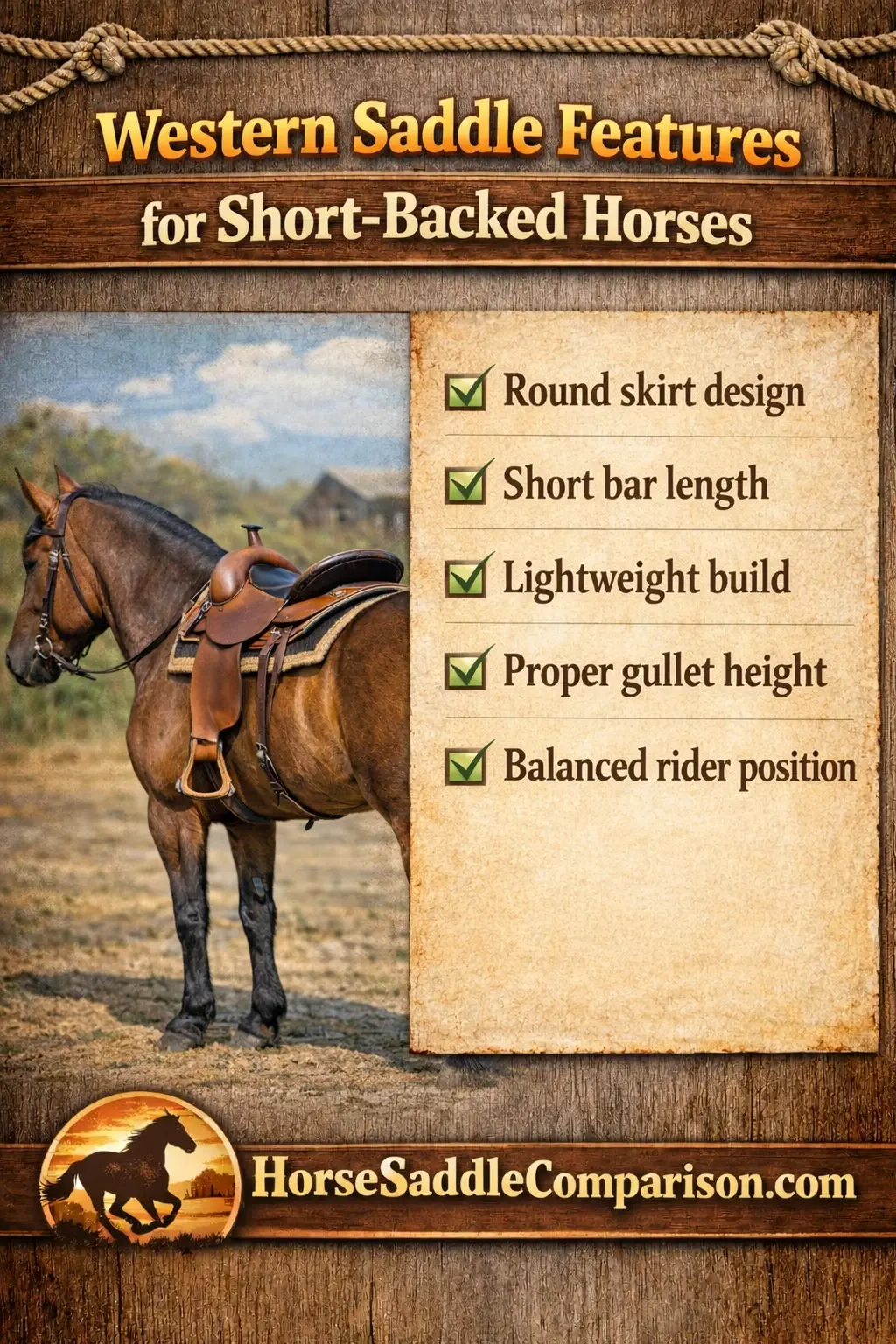
Saddle Features That Work for Short Backed Horses
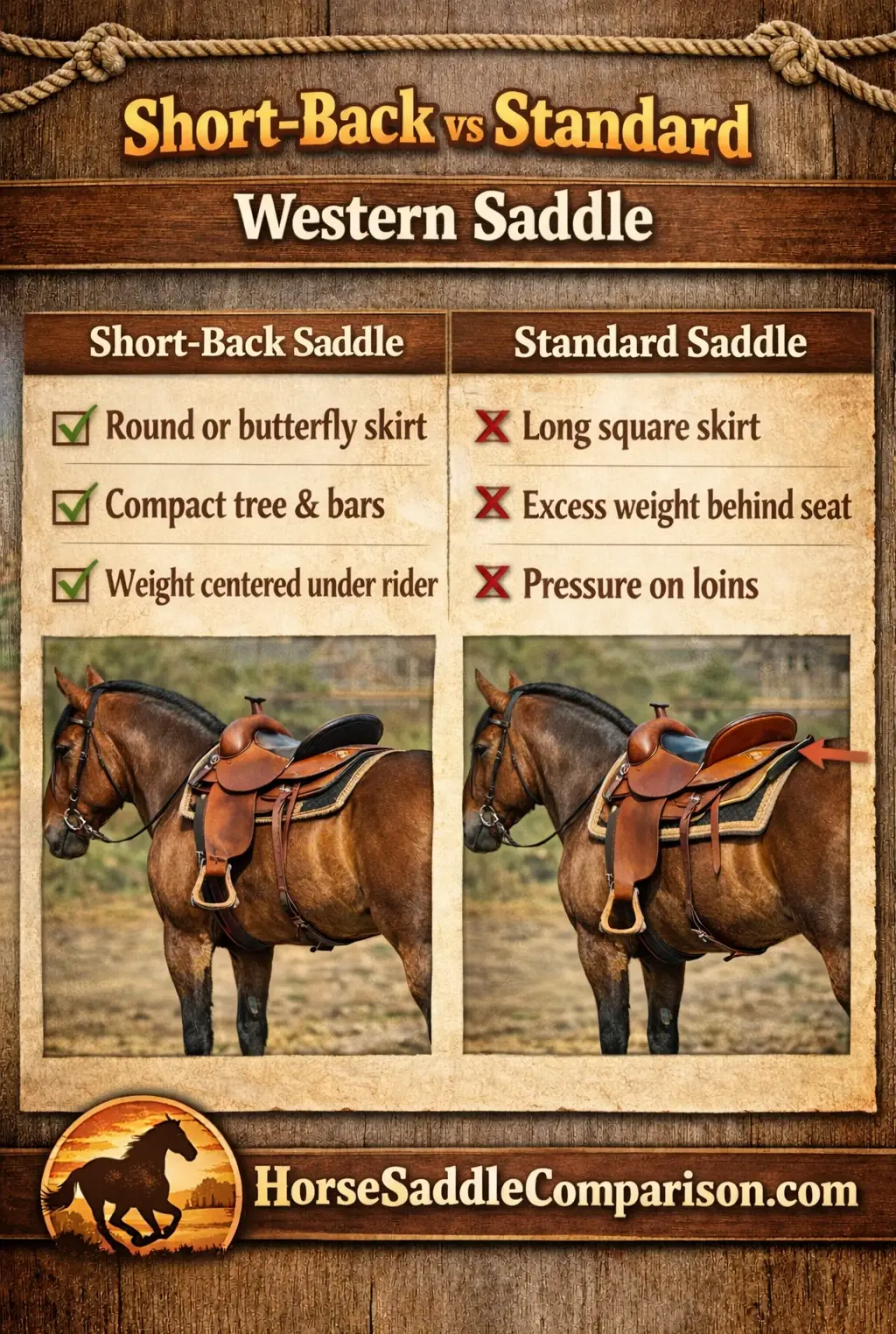
Making a few smart choices on features can improve fit a ton. Here are some things I always look for in shortbacked horse saddle solutions:
- Rounded or Cutaway Skirts: These reduce overall length and help avoid pressure on the loins.
- Short Tree Bars: Saddles built on shorter trees give more room for the horse’s back to move naturally.
- Lightweight Designs: Less bulk means easier movement for the horse and less muscle soreness after rides.
- Contoured Skirts: Skirts shaped to follow the natural curve of the back sit closer, with less risk of bridging.
- Quality Padding: Good padding under the saddle bars can help with slight shape mismatches and comfort.
For some horses, a custombuilt saddle is the way to go, but more brands offer off-the-shelf models with these features now than ever before.
You can sometimes improve fit with accessory pads shaped to fill minor gaps, but nothing beats a saddle that already matches your horse’s shape.
If you find your horse is especially sensitive to rigging placement, look for saddles with adjustable rigging so you can keep cinch pressure from interfering with movement or breathing.
How to Check Fit on a Short Backed Horse
I always start with a good visual check and a handson evaluation:
- Set the saddle gently on the horse’s back without a pad. Make sure the tree points and bars sit behind the scapula and end before the last rib.
- Run your hand under the front, middle, and back of the saddle. You’re looking for even contact all the way along, with about the same amount of pressure (no big gaps or tight spots).
- Check for “bridging” by seeing if you can slide your hand easily between saddle and back in the center; this usually means the saddle is too long or too flat for the back shape.
- Look at the skirt: it shouldn’t press into the loins or slope up over the croup.
- When the horse moves, watch for rocking, shifting, or pinching, especially at the loins or just behind the withers.
If you notice any dry spots or white hairs after a ride, that’s a red flag for poor fit and pressure points. Keep an eye out for swelling, soreness to touch, or behavioral changes in your horse’s attitude around saddling and riding.
These can be early warning signs that the saddle isn’t doing its job. Take the time to reassess every time you switch out tack or after any major weight changes in your horse.
Frequent Mistakes Riders Make
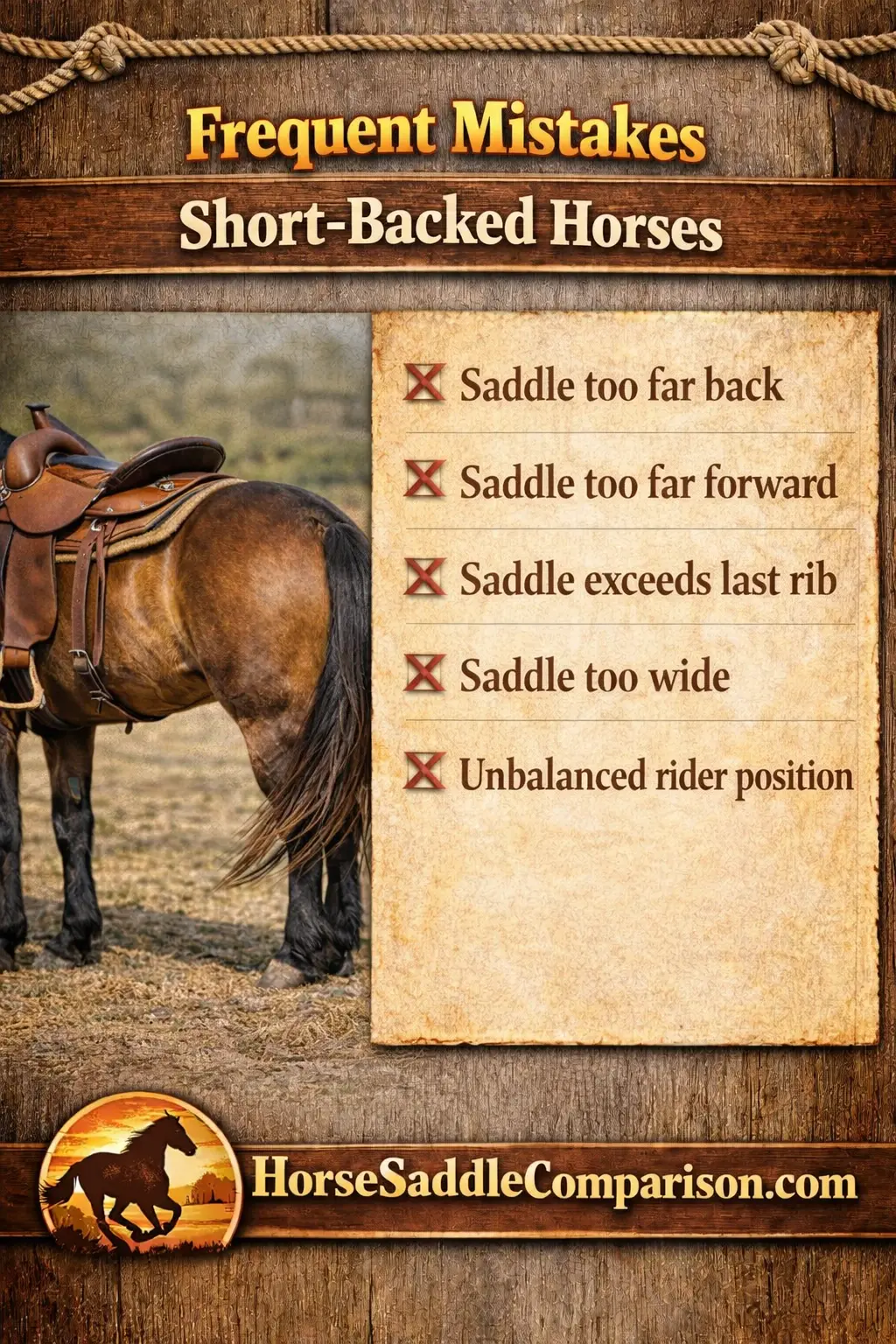
Sometimes it’s just a case of not knowing what to look for, but I’ve seen a few common mistakes with shortbacked horses and western saddles:
- Choosing by seat size alone; tree length and skirt shape matter, too!
- Thinking all “pony” saddles fit small horses; the bar shape and angle matter more for adult shortbacked horses.
- Throwing on extra thick pads to “fix” a poor fit; this sometimes makes things worse by tightening pressure points or lifting the saddle off contact areas.
Getting a knowledgeable saddle fitter to look at your setup is worth it. Two horses with the same measured back length may still need entirely different shapes depending on muscling, sway, or even how they move.
Don’t forget that your riding style counts, too.
What works for a slow-paced trail ride might not hold up for barrel racing or reining movements where you and your horse are constantly shifting weight.
When Alternative Saddle Designs Make Sense
If you’re struggling to get a classic western saddle to fit, you’re not out of options. More riders try round skirt, flextree, or even synthetic endurance saddles if nothing else works.
These often weigh less, have a closer-contact feel, and reduce the chance of bridging. Some endurance and trail saddles are especially well-designed for short backed horses, using shorter trees and round or butterfly skirts.
Some horses just do better in an English or Australian stock saddle, which can distribute weight nicely without the extra length. So it’s something to keep in mind if you keep running into problems.
While not everyone is comfortable switching disciplines, many riders find their horses are freer in the shoulders and back under lighter tack and more flexible saddle styles.
Read my post on lightweight saddles for short back horses and beginners.
Even if you stick with western, it can be worth trying a few different types to see what fits best.
Quick Fit Checklist for Short Backed Horses
- Is the saddle skirt clear of the hips and croup?
- Do the bars end before the last rib?
- Is contact even, with no bridging or rocking?
- Can the horse move its shoulders and back freely?
- Any soreness, dry spots, or new white hairs after rides?
Finding the right fit can take time, but it’s really important for both comfort and performance. Checking all these points every few months catches small issues before they turn into big problems.
Don’t rush the process—day-to-day changes in your horse’s weight or musculature as they progress in training can affect saddle fit, so re-evaluating regularly is key.
Keep notes on what works and what doesn’t, and don’t be afraid to ask experts for another set of eyes if something feels off.
Western Saddle Brands & Models Worth Checking Out
There are several alternatives for short back horses.
The below brands and models consistently come up in conversations about short backed horse saddle solutions. They’re known for design tweaks that make life easier for both horse and rider with compact backs.
- Circle Y: Trail and pleasure riders love Circle Y’s round skirt options and compact trees. Two models I hear a lot about: Circle Y Julie Goodnight Wind River (which has a balanced fit and short skirt) and the Circle Y Topeka or Omaha round skirt models. These tend to avoid the classic “too long” problem without losing stability or balance.
- Tucker: If you’re into longer rides, Tucker’s lightweight design and short bar contact area offer nice weight distribution. Tucker Trail Equitation Endurance and the Tucker Horizon shortskirt models work for everything from slow trail rides to serious endurance miles.
- Double J Saddlery: Stockier horses or those with a lot of muscling over a short back pair well with Double J’s custom roundskirt options. Their Pozzi Pro model, along with other custom builds, let you order short skirts and have plenty of balance. Riders who want a bit more customization seem to have luck here.
Shopping around, measuring carefully, and talking with saddle fitters who understand your horse’s unique shape goes a long way toward a happier ride.
Adjusting your expectations a bit from “any western saddle will work” to “I need to match my horse’s back first” pays off every time.
If you aren’t sure where to start, these brands are a pretty good jumping off point for your short backed horse saddle solutions search. Stick with it, stay flexible, and you’ll soon spot the signs of a truly comfortable saddle for both you and your horse. Happy riding!
Did you find this post helpful? If so, please leave your comments below. If you’re looking for more alternatives for short back horses click on this link.
Hello Shalisha!
This was such a practical and eye-opening article — thank you! I’ve always known saddle fit matters, but I never realized how uniquely challenging short-backed horses can be until I read your breakdown. Your tips on identifying common fit issues (like pinching or bridging) made those subtle problems feel real and understandable even for someone who isn’t a saddle fitter. It’s refreshing to see solutions that don’t just throw measurements at you, but actually explain how the horse feels and moves differently when a saddle doesn’t fit right.
I do have a couple questions now that you’ve given me a foundation to think from: when you’re first checking fit on a short-backed horse, are there signs you look for that are early warnings something isn’t right (even before the horse shows obvious discomfort)? And for riders who aren’t able to work regularly with a professional fitter, are there simple adjustments or interim solutions you’ve found that help improve comfort while searching for the ideal saddle? This article gave me a much better sense of what to watch for and how to think through fit rather than just guess — thank you!
Angela M 🙂
Hi Angela.
Thank you so much for such a thoughtful and encouraging comment — I’m really glad the article helped make short-back fit feel clearer and more relatable.
You’re absolutely right that these fit issues can be subtle at first, which is why I wanted to focus on how the horse feels and moves, not just measurements. Early on, I tend to watch for things like a saddle that creeps forward, restricted shoulder movement, short or choppy strides, or a horse that feels tense through the back even before there’s obvious soreness — those are often quiet signals that something isn’t quite right yet.
For riders without regular access to a professional fitter, there are some helpful interim steps. Simple things like reassessing pad thickness and shape, making sure the saddle isn’t sitting too far back, and paying attention to how the horse goes before and after small adjustments can make a noticeable difference while you’re searching for the best long-term solution.
I’m really happy to hear this gave you a better framework for evaluating fit instead of guessing — that’s exactly the goal. Thanks again for reading so closely and for taking the time to leave such a great comment!
This is an incredible guide! ???? I love how thorough you are about the challenges of fitting a western saddle to a short backed horse. The tips on skirt shape, tree length, and even alternative saddle styles are super practical.
I especially appreciate the brand recommendations and the quick-fit checklist—it makes such a confusing process feel way more manageable. Thanks for sharing your expertise!
Hi Monica. Thank you for your comment. I am so glad you found my post helpful.