
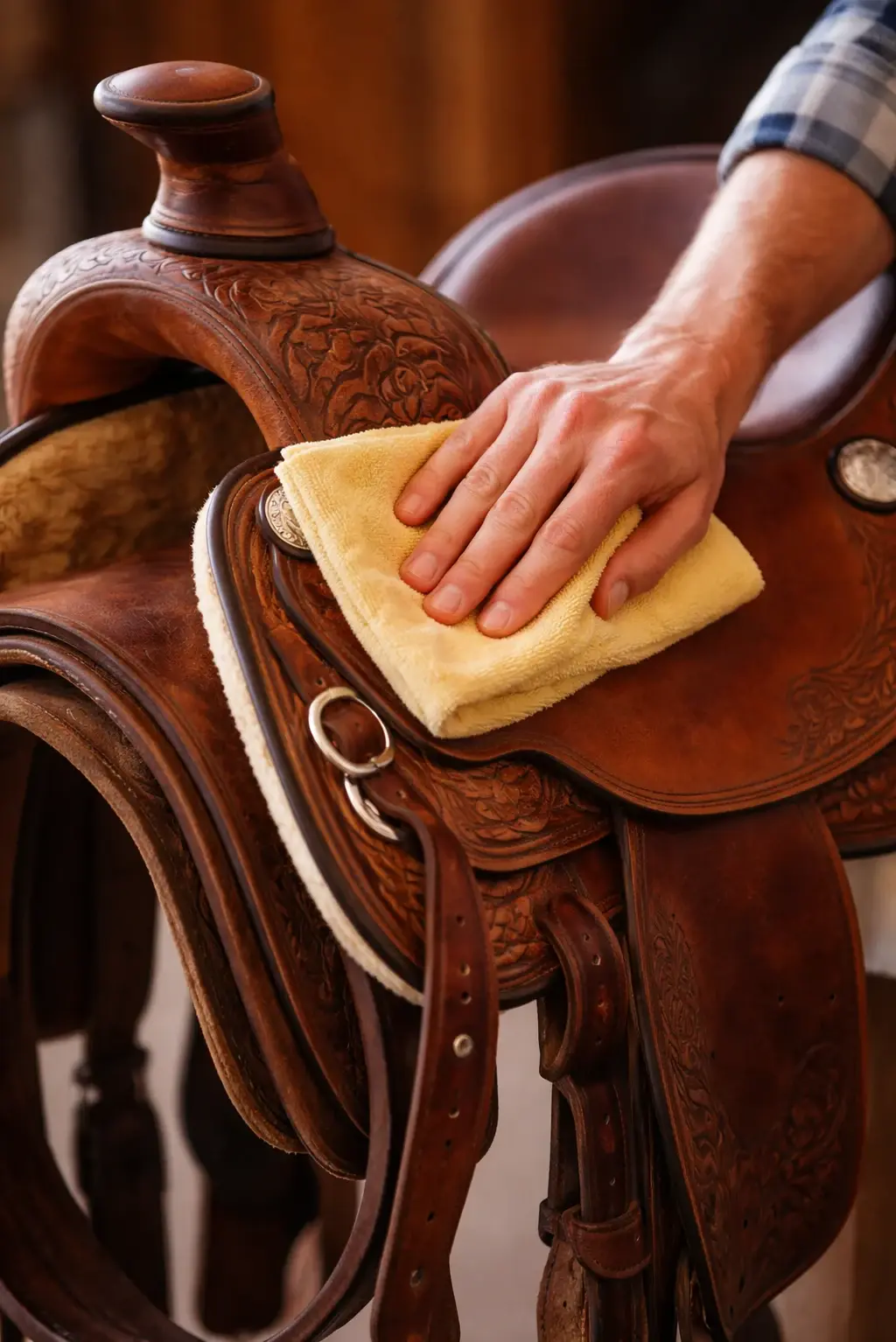
If you want your western saddle to last for years, a solid care routine is going to make a big difference. Saddles take some pretty tough punishment out on trails and in the arena, so I always like to keep things simple and practical.
Here’s everything I’ve learned about the best saddle care practices for western saddles.
This covers daily habits, cleaning tips, conditioning, storage, and more. Whether you just got your first saddle or want to keep your old favorite looking sharp, these tips can help extend its life and keep it safe for you and your horse.
Just a quick heads-up for transparency: this article may include affiliate links. If you choose to buy through one of them, I may earn a small commission at no extra cost to you. It helps support CharmingCanters.com so I can keep creating helpful resources for parents and young riders.
Daily Wipe Down: The #1 Habit That Extends Saddle Life
Dust, horse sweat, arena footing—your western saddle picks up a lot on even a short ride. Regular wipedowns are the best way I’ve found to keep grime from damaging leather or corroding hardware.
After each ride, I just grab a damp (not soggy) towel or soft cloth and quickly wipe every surface of the saddle.
I focus on the seat, fenders, stirrup leathers, and rigging. If you let sweat or dirt sit, it will dry out leather or cause stains that are tough to remove later.
Making this part of your daily routine only takes a couple of minutes and really cuts down on deeper cleaning chores. I also do a quick check for any loose screws, damaged stitching, or stuck buckles.
Catching small issues early stops them from turning into expensive repairs.
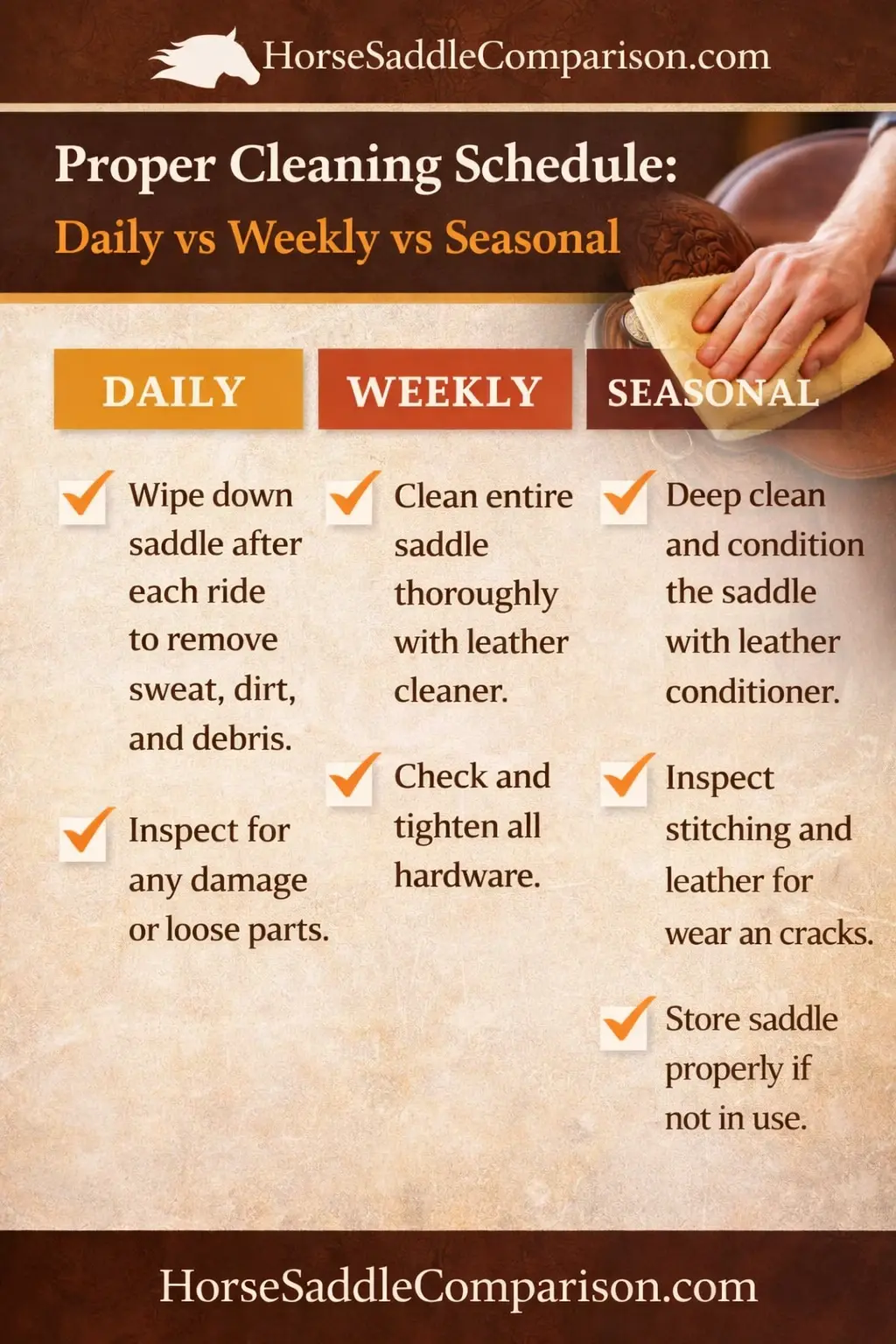
Proper Cleaning Schedule: Daily vs Weekly vs Seasonal
Saddles made with higher-quality leather respond best to consistent cleaning and conditioning, especially premium brands like those featured in our Circle Y saddle reviews.
A quick wipe every day goes a long way, but deeper cleaning keeps your western saddle looking and performing its best. Here’s a breakdown of what usually works for me:
- Daily: Wipe down with a damp cloth and do a visual check for damage.
- Weekly: Use a mild saddle soap and soft sponge to clean any buildup on high contact areas—cinch billets, stirrup leathers, and the seat. Always follow with a dry towel to remove excess soap or moisture.
- Every Few Months: Take your saddle apart (remove fenders, stirrups, etc.) and do a full clean. Scrub all leather and metal parts, getting into creases and behind hardware. Let the saddle air dry; never force dry with a heater or leave it in direct sun.
How often you run through these steps really depends on your climate, how much you ride, and your conditions. If your tack room is humid or if you ride daily, you may need to deep clean and condition more often. In dry climates or for lightlyused saddles, a full cleaning every three to six months might be enough.
Conditioning Correctly (Without Over Oiling)
Conditioning leather is important but easy to overdo. Too much oil or conditioner will soften leather so much that it loses its shape and can mess with the strength of your saddle. I like to use a high quality leather conditioner, making sure it is something meant for saddles and steering clear of heavy, sticky oils.
Here’s what works best for me:
- Wipe the saddle clean and make sure it’s fully dry before you condition.
- Use a soft cloth or sponge to rub conditioner into the leather in thin, even layers, focusing on areas that flex a lot, like the seat and fenders.
- Avoid soaking the saddle, especially the underside and stitching. Overoiled fleece lining can start to break down and stitching might loosen up.
- Let the conditioner absorb for a few hours (or overnight if needed), then wipe off any extra. Excess product just attracts dust.
In my experience, conditioning every two to three months works for most western saddles, but sometimes you’ll see or feel dryness sooner. Keep an eye on your leather for cracks or stiffness, and touch up as needed. Remember that less is often more when it comes to saddle conditioners. If the leather is shiny and soft, it probably doesn’t need more product. Only apply when you spot dryness or after a deep clean.
Storage & Environment: Protecting Shape, Rigging & Skirts

How and where you store your saddle plays a big role in how long it lasts. Leather hates wild swings in temperature or humidity. Too much dampness leads to mold and mildew; too little causes cracking. I keep my saddle on a padded stand, never slung over a fence or left on the ground where it can get kicked or warped.
Here’s what to watch for:
- Pad your saddle stand: Hard or sharp racks will leave pressure points, which can stretch or bend the tree, rigging, or skirts over time.
- Control humidity and temperature: A dry tack room with some airflow is ideal. Use a dehumidifier if your area tends to stay damp.
- Keep out of direct sunlight: UV rays dry and fade leather much faster than you might expect. Cover your saddle with a breathable cloth, not plastic, so you avoid trapping moisture.
- Hang up cinches and billets: Don’t leave them hanging awkwardly off the saddle, since that can pull on the rigging and stretch it out.
If possible, try not to stack other tack or heavy gear on your saddle. Keep rodents or pets away from leather parts; they sometimes chew or scratch, causing real headaches later. Padding your saddle stand and keeping it out of harsh weather are simple steps that help a saddle keep its shape for years.
Regular Safety Checks: Stitching, Rigging & Wear Points
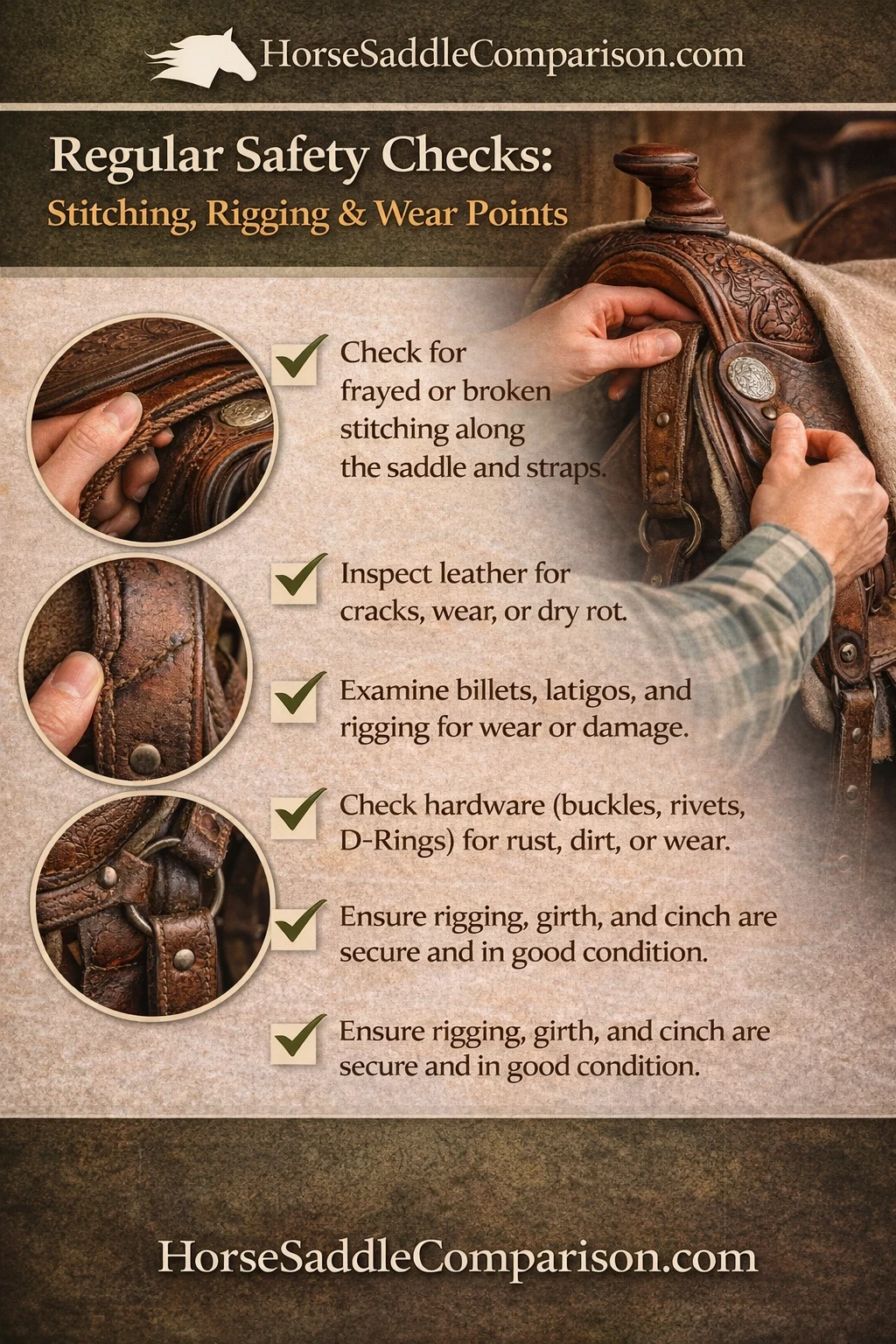
Hand-built saddles with traditional rigging benefit from routine inspections, which is especially important for the custom craftsmanship highlighted in our Double J saddle reviews.
It’s super important to check your saddle’s safety points, especially if you ride often or do rough work. Before every ride, I look over all stitching, buckles, conchos, and especially the rigging that holds cinches and billets.
Here’s a quick list of what I look for:
- Loose or popped stitches—especially on the skirts and fenders
- Cracks or fraying on billets and latigo straps
- Corroded or missing rivets, screws, or Drings
- Broken fleece or uneven padding on the underside (it should sit flat on the horse’s back)
Rechecking your saddle regularly gives you peace of mind and can help you avoid an accident out on the trail or in the arena. If you’re not sure about something, a quick checkin with a professional saddle repair person can save a lot of stress later. Spot issues early and your saddle will last much longer.
Common Western Saddle Care Mistakes to Avoid
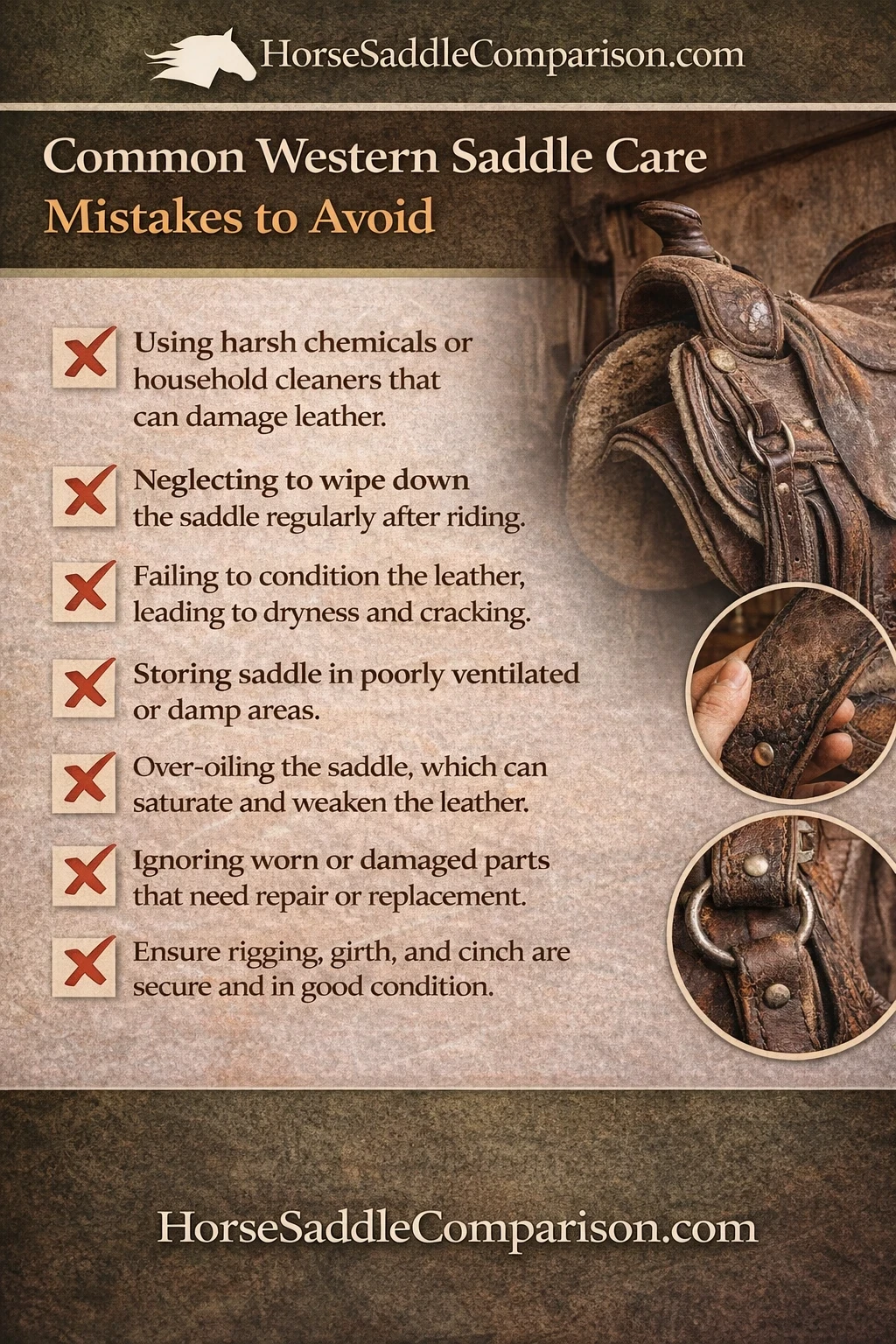
Saddles used regularly for training or everyday riding should be checked closely for stitching and fleece wear, a common consideration discussed in our Billy Cook saddle reviews.
Even experienced riders sometimes fall into habits that hurt a saddle’s longevity. Here are some things I’ve personally learned to avoid:
- Skipping wipedowns: Dirt and sweat left on leather can eat away at the surface pretty quickly.
- Using harsh cleaners or furniture polish: Stick with products made for leather and saddles, since multipurpose cleaners can cause more harm than good.
- Overconditioning or oiling: Too much product will leave leather soggy and weak, not softer or healthier.
- Storing in poor environments: Avoid leaving your saddle in hot cars, damp basements, or sun drenched porches.
- Neglecting regular checks: Small cracks and loose fittings can get worse fast if ignored.
I also always avoid using plastic wrap or bags for storage. Leather needs to breathe, and trapping moisture guarantees mildew or mold. A breathable cotton or canvas cover works much better. If you live in an area where humidity is high most of the year, consider investing in small moisture absorbers for your tack room. Double up your efforts in those muggy summer months so your saddle stays safe.
Frequently Asked Questions: Best Saddle Care Practices for Western Saddles
Here are some things folks often ask about caring for their western saddles:
How do I get rid of mold or mildew on leather?
If you spot mold, take your saddle outside to avoid spreading spores inside. Brush off as much as you can and gently clean the area with a vinegar water solution or a specially formulated leather cleaner. Let it dry before conditioning, and try to fix any moisture issues in your tack area so the mold doesn’t come back.
Can I use any oil on my saddle?
Stick with oils and conditioners meant for saddles. Neatsfoot oil or labeled leather conditioners are best. Vegetable oils or cooking oils can go rancid or break down leather fibers, so always use a product designed for tack.
How can I keep saddle fleece clean?
A soft grooming brush works for loose dirt, but for deep cleaning, use a barely damp sponge and let the fleece dry completely before putting the saddle away. Never soak the fleece or put it away while damp.
Is it bad to ride in the rain?
Riding in wet weather won’t ruin a saddle as long as you dry it out thoroughly afterward. Wipe down the whole saddle, let it air dry away from heat, and check for any signs of water damage before storing.
Pay attention to mold or mildew during rainy months and don’t store a damp saddle in a closed compartment.
Proper saddle care is a simple habit that truly pays off in the long run, and the time you spend now will save you money and headaches later. Take a few extra minutes each week, and your western saddle will stay safe and eye-catching for years to come.
Even the best Western saddles can lose comfort, balance, and longevity without proper care. If you’re comparing saddles or already riding in one, our hands-on reviews and roundups can help you understand what to expect long term:
• Circle Y saddle reviews
• Double J saddle reviews
• Billy Cook saddle reviews
• Trail saddle roundups
• Barrel saddle comparison reviews
Something I would have never even considered as a non-horse rider but still interesting. Simple breakdown and beginner’s guide. Definitely seems like a good guide for beginners who have just started riding, but also for long-term riders who have taken their saddle for granted or not given it enough care. Seems it is important to first buy the right saddle, then as long as you take care of it it will last. Shows that there is generally more that goes into what some people would even consider easy hobbies.
Hi John. Thanks for your comment. Yes. There’s so much more thought that needs to go into purchasing a saddle other than how it looks as well as price tag. Caring for the saddle is important since it’s a huge investment. Glad this post was helpful.
Hi Shalisha, this guide is very practical and easy to follow, especially for people who haven’t had much experience caring for saddles. What stood out to me is how you break saddle care into daily, weekly, and seasonal habits, which makes the routine feel much easier instead of complicated.
I also like that you included reminders about over-conditioning and proper storage, since those are common mistakes many people make. Overall, this is a helpful and well-explained guide.
I was curious, in your experience, does climate play a bigger role than riding frequency when it comes to how often a saddle needs conditioning? Great tips overall—very useful for keeping saddles safe and long-lasting.
Hi Mohamed.
Thanks so much! I’m really glad the breakdown into daily, weekly, and seasonal habits resonated with you—that structure really helps it feel doable, doesn’t it?
Great question! In my experience, climate often has a bigger impact than riding frequency when it comes to how often a saddle needs conditioning. In hot, dry, or super humid environments, leather can dry out or absorb excess moisture more quickly, so it needs attention more often—sometimes even if you haven’t ridden much. In moderate climates, you can usually stick closer to the regular schedule I outlined.
That said, if you’re riding every day and sweating a lot, that can also speed up how fast dirt and salt build up in the leather, which means more frequent cleaning and conditioning too.
Thanks again for the thoughtful comment—happy riding and saddle caring!