
If you’ve got a Western saddle you love, keeping it safe from rain, sunlight, humidity, and dust is something you’ll really want to pay attention to. Weather damage can lead to cracking, mold, and even warping, which makes your ride less comfortable and knocks years off your saddle’s life.
There are some practical steps you can take to make sure your saddle holds up, even if the weather where you live is unpredictable. Here’s how I keep my own Western saddle in top shape, even when the forecast isn’t in my favor.
Just a friendly disclaimer for transparency sake. This post may contain affiliate links. I may earn a small commission if you purchase through my links, at no extra cost to you.
Why Western Saddles Need Special Care
Western saddles are a combination of sturdy leather, fleece, and metal parts, and each bit responds differently to moisture, heat, and sunlight. Leather is especially vulnerable. When it gets too wet, it can grow mold or stretch out. If it dries too fast or in direct sunlight, it can crack or become brittle. Even the underside, with its sheepskin or synthetic fleece lining, can collect sweat and dirt. This adds to the risk of mildew or breakdown. Western saddles aren’t cheap, so taking some small steps really helps them last much longer.
It’s not just about looks. A saddle’s fit and comfort depend on keeping the leather flexible, the stitching strong, and the structure from getting warped. The damage caused by letting moisture creep in or failing to regularly clean off dust and sweat can get expensive to fix. So, the best way to keep your Western saddle ride-ready is to make sure it’s protected from all kinds of weather trouble: rain, humidity, heat, cold, and even just plain old dust.
Daily Maintenance to Prevent Weather Damage
Most of the work to protect your saddle from weather starts with simple, daily routines. You don’t need anything fancy, just a soft brush, a slightly damp rag, and some time after each ride. Here’s what I try to do every day, especially if the weather’s been wild:
- Wipe Down After Every Ride: I use a soft cloth to wipe away sweat, dust, and dirt, especially on the underside of the saddle. This simple step keeps moisture from building up and stops salt from sweat from doing long-term damage to the leather.
- Use Saddle Soap Regularly: Clean off any grime or mud with a good quality saddle soap. I like to focus on corners and stitching, since that’s where dirt builds up most.
- Treat With Conditioner: Leather conditioner keeps things supple and helps prevent cracking due to dryness or heat. I apply it more often during dry spells or after my saddle gets a quick soak in rain.
- Check for Water or Mold: It’s easy to miss a damp spot, especially after a wet ride, but a quick check can stop mold before it starts. If I ever spot mold, a quick clean and some time in a well-ventilated area helps clear it up.
How to Store Your Saddle Safely
Where and how you store your Western saddle can make all the difference in protecting it. Keeping your saddle off the floor, out of damp corners, and away from the elements goes a long way. Here’s what works for me and most other riders I know:
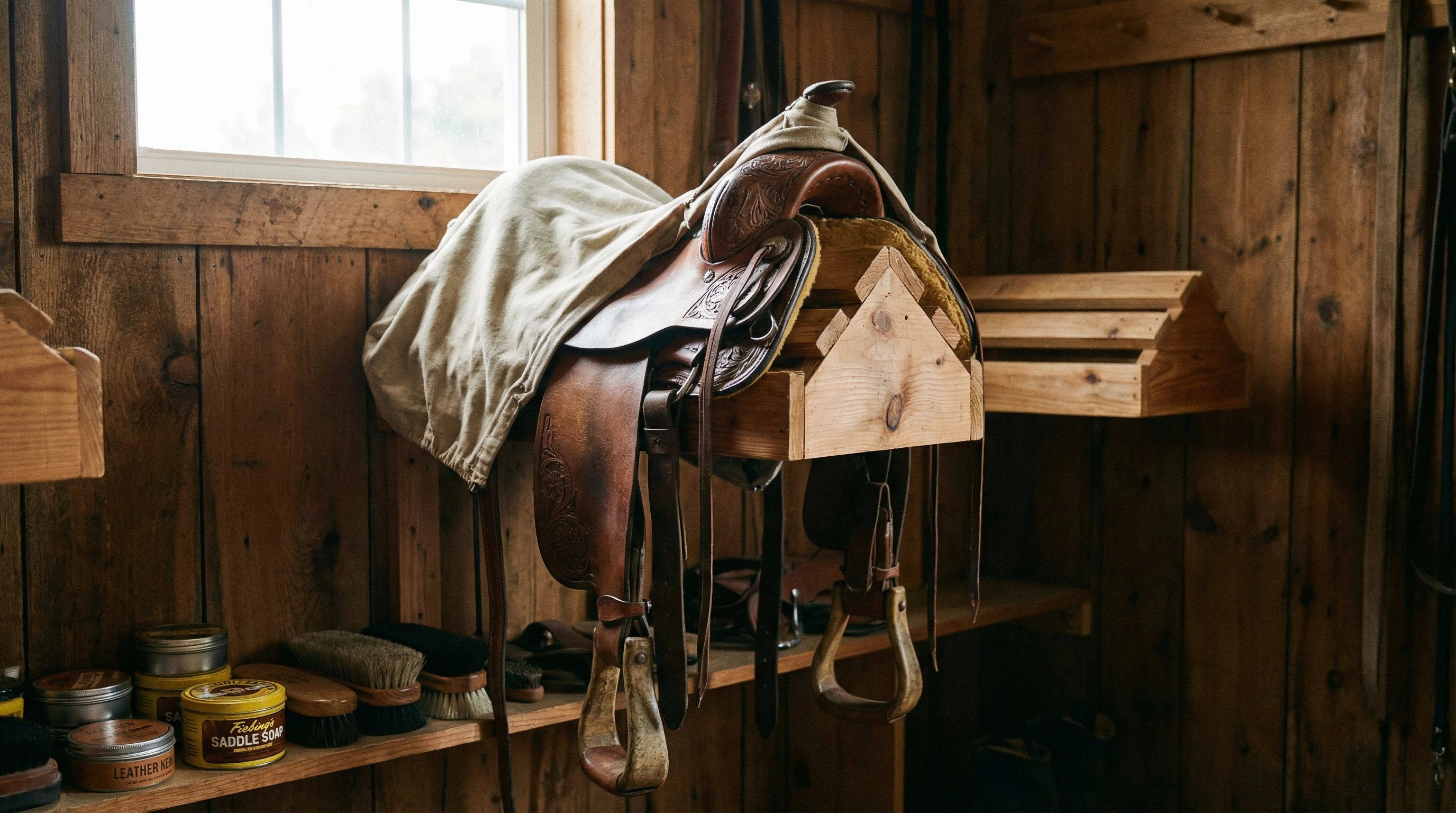
- Saddle Stand or Rack: Always use an elevated saddle stand or rack; never store your saddle on the ground. This lets air flow underneath and stops moisture from getting trapped in the fleece lining or leather.
- Climate Controlled or Dry Environment: Tack rooms that are climate controlled or at least kept dry and well ventilated are best. Avoid spots that are too humid or have big temperature swings. These conditions can cause leather to stretch, warp, or mold.
- Keep It Covered: Use a fabric based, breathable saddle cover for daily storage (skip the plastic, since it traps moisture and causes mildew). These covers keep dust and UV light off your saddle without sealing in any dampness.
- Don’t Store Wet: If your saddle gets wet, I let it dry slowly at room temperature. Sticking it in front of a heater or in direct sunlight can dry the leather too fast and cause cracks.
Choosing the Best Protective Covers
Covers can make a huge difference in avoiding weather related saddle damage, but not all covers work the same way. Here’s how I pick out covers for all seasons and conditions:
- Breathable Fabric: Cotton or polyester blend saddle covers allow air to pass through, preventing condensation and mildew. Plastic covers might seem like a good idea to block rain, but they should really only be used for very short trips because they trap humidity.
- Water Repellent Options: If I’m hauling my saddle in a trailer, or storing it in a spot that might leak, I grab a water repellent cover (like the options you’ll find from top tack suppliers on Amazon). These keep out rain and snow but still let the saddle breathe.
- UV Protection: Some covers are treated to reflect sunlight, which is useful if your tack room gets hot or has sun coming in through windows. UV protection keeps the leather from fading or drying out.
Conditioning and Cleaning Techniques for All Seasons
Every season brings a different challenge: rainy springs, hot dry summers, humid falls, and icy winters. Keeping with a cleaning and conditioning routine is your best defense all year:
- Wet Weather: If my saddle gets caught in a downpour, I’ll remove as much water as possible with a clean towel, let the saddle dry naturally in a ventilated area, then apply conditioner as soon as it’s dry to the touch. The Trainer’s Loft recommends this slow drying process to avoid rapid shrinkage.
- Hot Weather: Daily conditioning keeps leather from drying out in high heat. Sweaty rides mean more regular cleaning with saddle soap to get rid of salt and grime.
- Dusty or Arid Climates: Regular dusting and a light application of conditioner make sure the leather doesn’t turn brittle. For me, using less product and a little more elbow grease goes a long way.
- Mold Prevention: In humid areas, keeping ventilation up and storing with a desiccant packet nearby (like a little bag of silica gel) can help. I always double check covers to keep them truly breathable.
This cleaning routine is similar to what’s discussed over on the Mousm blog, especially about conditioning after exposure to extreme temperatures or dampness. It’s really about being consistent, not just thorough after a disaster.
Smart Ways to Prepare for Rain, Snow, and Extreme Sun
Even with all this prep, weather can surprise you. One random summer storm or a few hours in a hot trailer can do some real damage. Here are a few tricks I rely on when I know weather could be a problem:
- Trailer Ready Protection: Before traveling, I use a tough, water repellent cover and double check the inside of my trailer for leaks or sharp edges that could tear a cover.
- Quick Dry Towels: I always keep a fast absorbing towel in my tack kit to wipe off rain or morning dew before storing my saddle.
- Temp Checks: I avoid leaving saddles in cars or trailers during heat waves, since heat buildup can dry out the leather super fast.
- Shade and Air: When outdoors at events, I try to stash my saddle in the shade and out of wind driven rain. If nothing else, a big cotton towel thrown over a saddle beats nothing at all.
It also helps to have a backup plan for sudden weather changes, like moving the saddle quickly indoors or using extra padding under covers if you expect heavy rain or hail.
Common Questions About Saddle Weather Protection
I often get these same questions from other riders and new horse owners. Here are some quick answers to the things folks usually ask about the most.
Question: How often should I clean and condition my Western saddle?
Answer: For most riders, cleaning after each ride and conditioning every few weeks works well. If the weather is humid or you’re riding often in rain or sun, condition a bit more often. Adjust as you go, based on how your saddle feels and looks.
Question: What if my saddle gets soaked in the rain?
Answer: Dry it off with a towel, remove the cinches and stirrups (to get air inside the sleeves), and dry at room temperature—never in direct sun or with a heater. Once it’s dry, condition it well and inspect for any softening or mold growth. Prevention is easier than repair.
Question: Can I use oils on my leather saddle?
Answer: I stick with conditioners meant for saddles rather than straight oil, as too much oil can break down stitching and make leather too soft or sticky over time. Use products made for tack, and try them first on a hidden spot.
Question: Are simple canvas tarps enough to protect my saddle?
Answer: Tarps work for short term outdoor cover, but they’re not breathable and may trap condensation. Inside the tack room or trailer, covers meant for saddles are a better choice. For emergencies, a canvas tarp plus a breathable layer is better than plastic.
Final Thoughts on Keeping Your Western Saddle Weather Proof
Protecting your Western saddle from weather damage boils down to smart daily habits, the right storage, and being prepared for sudden weather changes. Only takes a few minutes to wipe down your saddle, slip on a good cover, and stash it where air can circulate. Staying ahead of the weather keeps your saddle looking great and ready to ride for years, with less money spent on repairs and replacements along the way. Enjoy the comfort and tradition that come with a well cared for Western saddle no matter what the forecast holds.