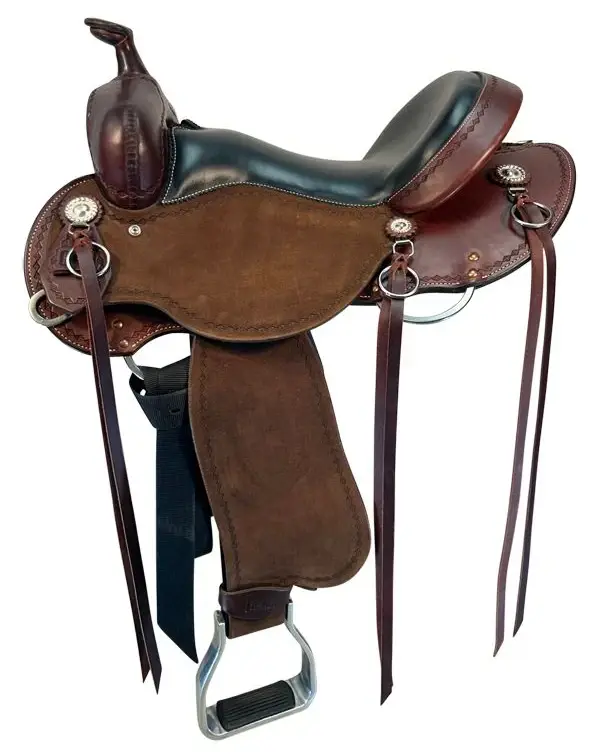
I’m writing this Cashel saddles reviews for women trail riders because I want you to evaluate comfort, fit, pros, cons, and whether Cashel is worth buying before you invest.
Before I start my review, here’s a little transparency:
Some links on this website are affiliate links. If you choose to make a purchase through them, I may earn a small commission at no additional cost to you. This helps support HorseSaddleComparison.com and allows me to continue providing honest Western saddle reviews and comparisons.
Cashel saddles have been showing up a lot more in Western tack shops and online lately, especially for trail riding and anyone who wants a lighter alternative to traditional heavy Western saddles.
If you’re wondering if Cashel is right for your riding or if you’ve got questions about price, comfort or how they stack up to other big brands like Circle Y, Big Horn and Billy Cook, you’re definitely not alone.
In my humble opinion, Cashel saddles are a solid choice if you want comfort without paying custom-saddle prices.
Why do I say this?
I’ve spent quite a few miles in Cashel trail saddles and have talked with fellow riders—from seasoned trail folks to newer riders upgrading from basic starter tack. Here’s the low down on what you can expect from Cashel saddles, especially if you value comfort, want something that’s manageable to lift onto your horse, and you don’t want to pay custom-saddle prices.
Are Cashel Saddles Good Quality for the Price?
Cashel saddles are best known for being dependable and pretty affordable compared to big-name Western brands. Most models use quality leather and well-built synthetic materials.
The tree construction is solid, with many using wood covered with fiberglass or another reinforcement that holds up well for trail riding and daily use. You won’t always get the same ultra-premium feel as a custom saddle.
But for the price point, it’s tough to argue with how well they hold up for recreational riding.
I’ve found Cashel saddles comfortable right out of the box and sturdy in the seat, even on longer rides. The stitching is clean and hardware stays put. For regular trail miles, fun runs around the arena, or ranch work on your own property, they deliver what most riders are looking for in this price range.
Where Are Cashel Saddles Made?
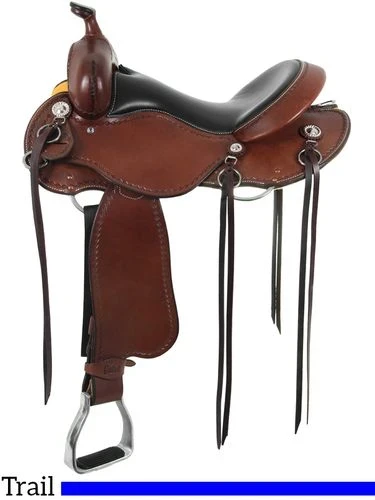 15″ to 17″ Cashel Western Trail Saddle, Reg, Wide and XWide Tree
This is a question I see a lot. Cashel’s headquarters are in Texas. But not all their saddles are fully made in the USA. The company designs saddles in Texas, but some manufacturing is done overseas using Cashel’s specs and quality standards.
Final assembly and finish work is typically completed in Texas to keep quality up. That blend helps keep costs reasonable while still producing a saddle that lasts.
What Riding Styles Are Cashel Saddles Best For?
Trail and pleasure riding are definitely Cashel’s sweet spot.
Their saddle designs focus on rider comfort, balanced seats, and upgrades like extra soft foam or memory foam padding. Some models are made for endurance, short-backed horses, or youth, and there are barrel models too.
But most Cashel saddles you see in stores are built for all around trail riding and Western pleasure.
- Great for: trail riders, casual ranch work, recreational arena riding, women and youth riders who want a lighter build
- Okay for: some barrel racing and light competition (check model specs for fit and features)
How Comfortable Are Cashel Saddles for Long Rides?
Cashel puts a lot of emphasis on soft seats and ergonomic design. This is really noticeable if you spend a couple hours in the saddle at a time. Trail models usually come with nice deep seats, some memory foam, and a bit wider twist, which means you don’t end up pinched or sore.
Seat build varies a bit between models, but I’ve made it through plenty of six-hour rides in a Cashel trail saddle without feeling like I needed a chiropractor the next morning.
How Do Cashel Saddles Fit the Horse?
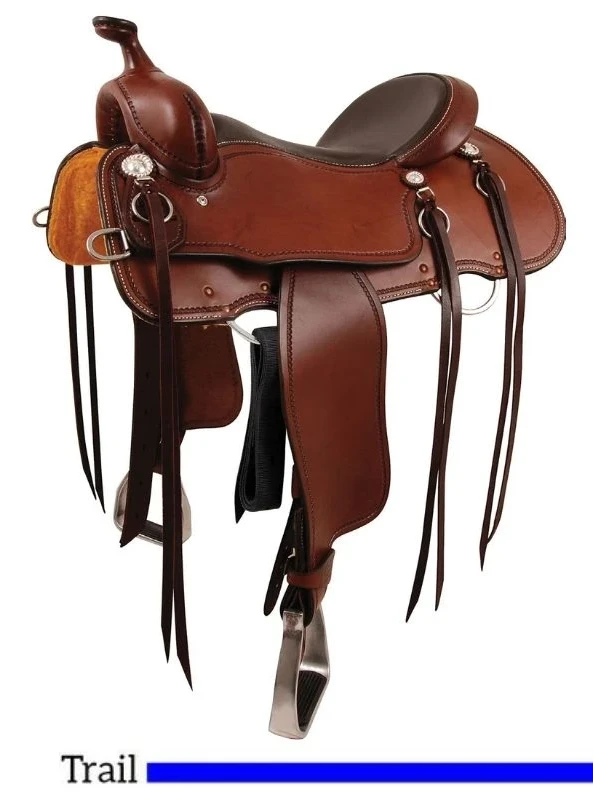 15″ to 17″ Cashel Trail Blazer Saddle SA-TB
Cashel saddles generally run true to Western sizing, and most are built to fit the modern stock horse.
So if you’ve got a Quarter Horse or other broad-backed trail horse, they tend to work pretty well. Gullet widths and bar styles are listed clearly for each saddle, which helps when picking out the right fit.
- Wide horses & Quarter Horses: Most Cashel models fit these breeds well, especially the trail and all purpose saddles.
- Pressure relief: Many Cashel designs have extra padding or a slightly more flexible skirt for sensitive or hard to fit horses, which is a real bonus if your horse has ever hated a traditional stiff saddle.
- Sensitive and hard to fit horses: Double check the tree shape and gullet measurements, and don’t hesitate to try a test fit or loaner if you can. Cashel’s trees tend to be forgiving but checking fit in person is smart.
Are Cashel Saddles Lightweight?
This is where Cashel really shines. Most traditional Western saddles weigh between 30 to 40 pounds. But Cashel’s popular trail saddles weigh in around 21 to 27 pounds.
Some youth and synthetic models are even lighter. This makes them super appealing if you’re a smaller rider, have shoulder or back trouble, or just want to make saddling less of a workout. The lightweight design doesn’t mean flimsy, though; these saddles are solid for daily trail use.
How Do Cashel Saddles Compare to Circle Y, Double J, or Billy Cook?
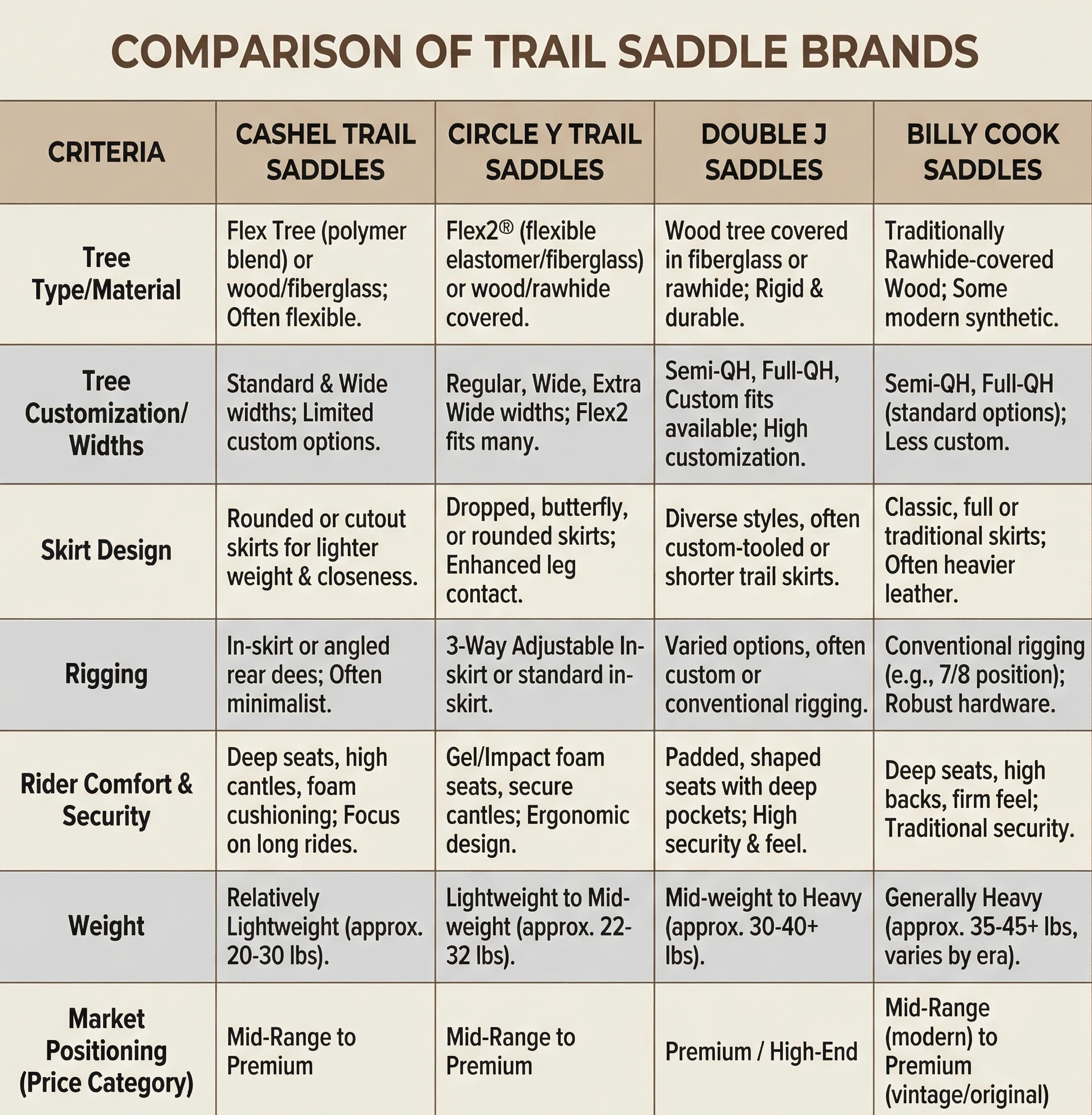
Here’s what you need to know if you’re cross-shopping these brands:
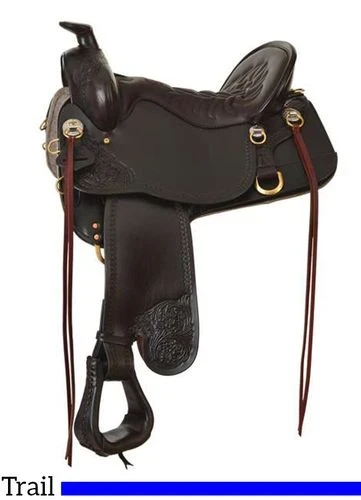 Circle Y Tucker High Plains Trail Saddle
- Price: Cashel saddles are expensive. But certainly not as expensive as custom-made saddles. Circle Y is expensive too, with Big Horn being least expensive. Still, all are high-quality.
- Comfort: All three brands offer nice, cushy trail seats, but Cashel holds up really well for all day comfort, especially for the price.
- Fit: Circle Y and Billy Cook trees might have more options for narrow or extra wide horses, but Cashel fits most average horses just fine.
- Build quality: Big Horn and Billy Cook feels a little sturdier and uses thicker leather, but it’s heavier. Circle Y is better for show ring looks. Cashel balances lighter weight and practical durability for trail and recreational riding.
- Best use cases: Go with Cashel if you want light and comfortable for trails, Billy Cook for ranch work, Circle Y for versatile all around Western rides, and Double J for specialized disciplines like barrel racing.
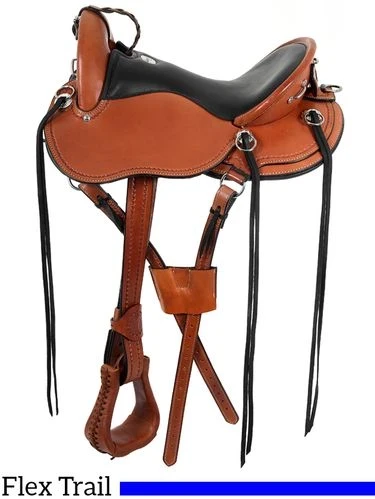 15″ to 17″ Circle Y Julie Goodnight Cascade Crossover Flex2 Trail
Do Cashel Saddles Hold Up Over Time?
You’re not looking at a saddle that’ll outlast a 30-year-old custom Billy Cook, but for what you pay, Cashel saddles can absolutely give you years of good use.
The leather wears in nicely with normal care, stitching holds up, and the trees have a good track record for strength. You might see a little more wear if you’re using a Cashel for heavy daily roping, but for trail and casual riding, durability is solid.
Are Cashel Saddles Good for Beginners?
I see a lot of beginner adults and youth riders get pointed toward Cashel. The lightweight feel makes saddle handling way easier, and the balance and seat security are helpful for new riders figuring out posture and position.
Most models have secure high cantles and padded seats, which are pretty forgiving if you’re just getting comfortable in the saddle.
Are Cashel Saddles Good for Women Riders?
Yes. This is one of the reasons Cashel has gained popularity, especially among trail and pleasure riders. Most models offer:
- Relatively narrow twists (where your seat bones rest) for comfort
- Easy to throw on weight (a big win for anyone under 5’5” or not wanting to wrangle 40 pounds of leather)
- Balanced seat pockets so you feel centered without sliding forward or back
In short, a lot of women and smaller riders feel more comfortable and less fatigued with these saddles, especially on long rides.
What’s the Typical Price Range for Cashel Saddles?
Here’s what I’ve seen in stores and online (depending which store):
- Horse Saddle Shop: Around $1,900 to $2,899 (and higher)
- Amazon: $2,999 to $4,315.39
- Youth models: $700 and up
You can usually snag good deals for used saddles, sometimes as low as $600 if they’re gently broken in. For what you pay, the comfort and features are pretty fair, especially if lightweight matters to you.
You can also get some good deals when it comes to Circle Y trail saddles, and they have a lot more range of trail saddles.
Are Cashel Saddles Worth Buying New vs Used?
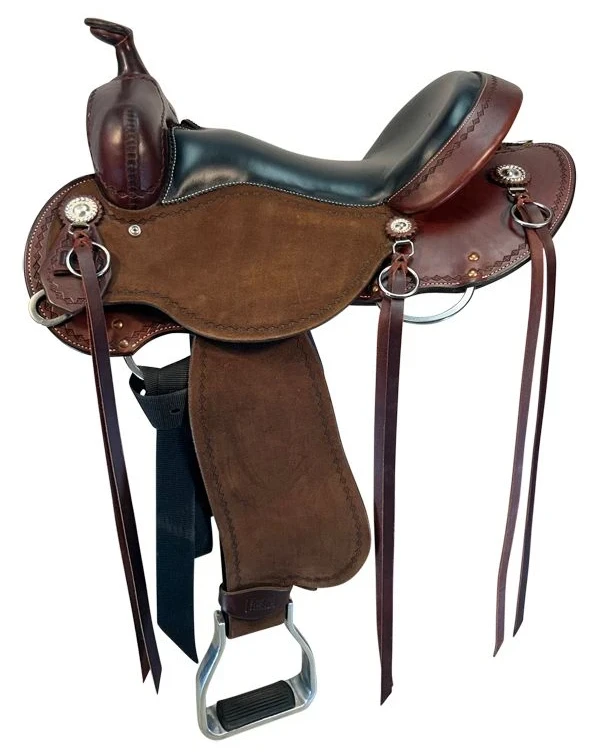
Buying new gets you the full manufacturer warranty and that fresh-out-of-the-box cushy seat pad, which is nice if comfort is a top priority.
Used Cashel saddles tend to hold value nicely as long as they’re not beat up (look out for stretched trees, cracked seats, or damaged billets).
Used is a good route if you want a bargain, but double check stitching, tree integrity, and whether it’s been well cared for.
Most Common Pros & Cons of Cashel Saddles
Pros:
- Lightweight and easy to handle
- Comfortable for long trail rides
- Budget friendly compared to premium Western brands
- Fits a wide range of Western horses
- Nice design with practical features (padded seats, secure cantles, handy trail tie points)
Cons:
- Pricey, but not as pricey as custom-made (and worth it)
- Some models use imported materials or assembly
- Not ideal for heavy ranch or roping work
- Basic looks, not a show or parade saddle
- Tree options are a bit limited for specialty fits
If you’re looking for a trail or pleasure saddle that doesn’t require a gym membership to carry or a second mortgage to pay for, Cashel is definitely worth trying.
And don’t forget, Circle Y and Big Horn have an array of mid to high-end range price and provide lightweight, high-quality trail saddles.
Take your time checking fit for both you and your horse and, if possible, give one a ride before you buy. Trail and recreational riders swear by them for a reason. They just make riding a little easier, especially if you’re ready for an upgrade from the starter saddle days.
At the end of the day, Cashel trail saddles are one of the best mid-priced trail saddles for women riders.
Did you find this post helpful? If so, please leave your comments or questions below.
Thank you for this incredibly helpful and specific review! As a woman who spends long days on the trail, the struggle to find a comfortable, lightweight saddle that doesn’t feel bulky or overwhelming is real. You’ve perfectly highlighted why Cashel stands out: their focus on a woman’s biomechanics with that narrower twist and contoured seat is an absolute game-changer for comfort and balance. The detailed breakdown of each model’s best use—from the tranquility for easy-gaited horses to the durability of the trail series—saved me hours of research. This is exactly the kind of practical, user-focused review the trail riding community needs!
Hi Cian. Thank you so much for your wonderful comment! I’m thrilled to hear this review resonated with you.
You’re absolutely right — finding a lightweight, comfortable saddle that actually fits a woman’s ride makes all the difference on long days out on the trail. Cashel’s design really does strike that sweet spot between comfort, balance, and performance! I’m glad the breakdown of each model helped narrow things down for you — that’s exactly what I was aiming for. Happy trails, and feel free to share any saddle experiences you have along the way!
This is a very interesting and educational article, Shalisha. You had mentioned this Cashel saddle review for women trail riders is for evaluating comfort, style, fit, etc. Do men trail riders need to look at a different size, fit, or any other feature? And is there a significant damage prevention needed along with “maintaining” a Cashel saddle? Thank you for your very informative article.
Best wishes,
Kent
Hi Kent!
Thank you so much for reading and for your thoughtful questions!
Men don’t need a different type of Cashel trail saddle than women. The key is choosing the correct seat size and tree width based on the rider’s build and the horse’s shape—not gender. Cashel saddles are designed to fit a wide range of riders comfortably.
As for care, regular cleaning, conditioning, and proper storage are usually all that’s needed. Checking stitching and keeping the saddle dry after rides helps prevent long-term damage and keeps the leather in great shape.
Thanks again—I’m glad you found the article helpful!