
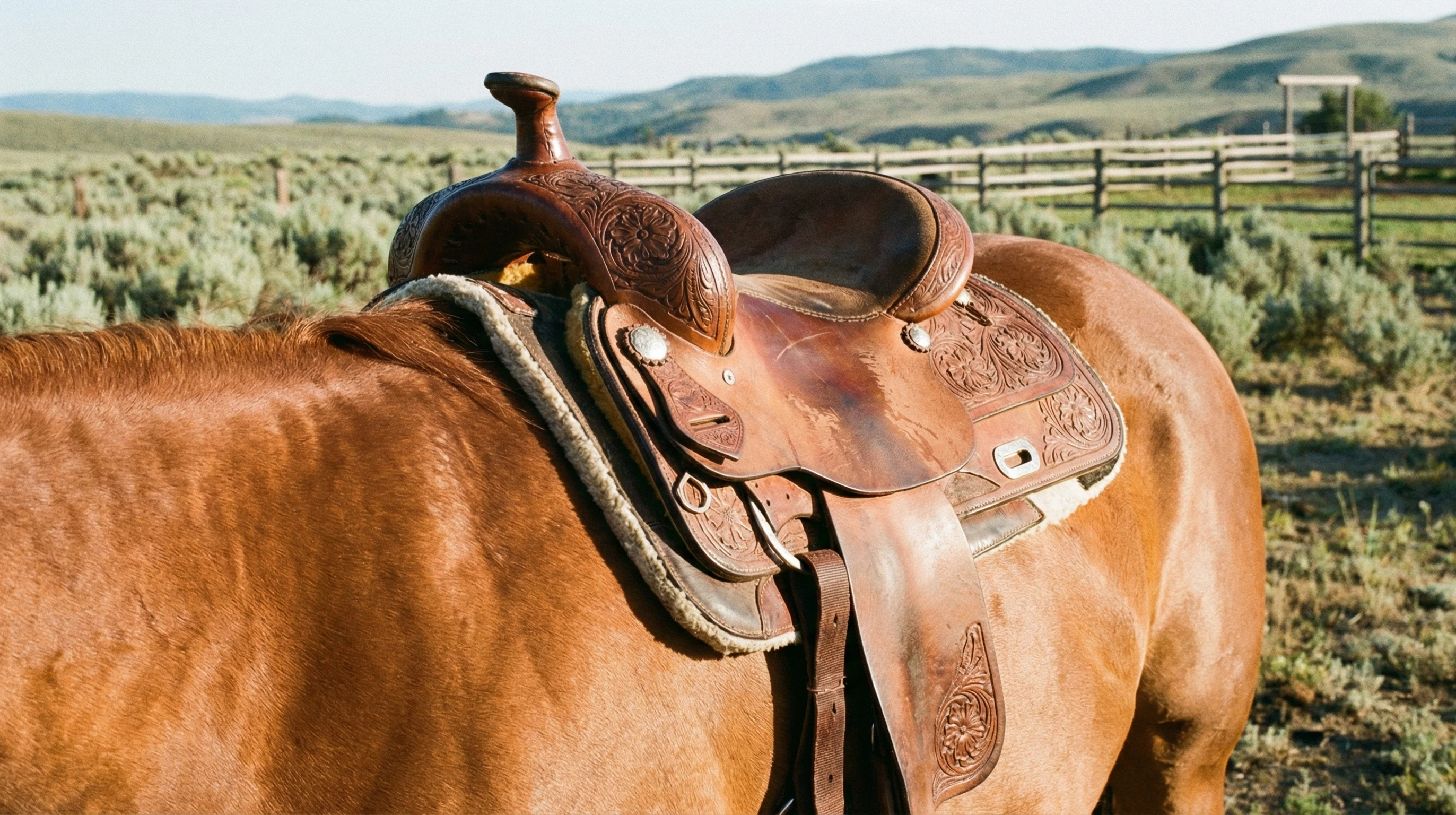
 If you own a Quarter Horse, you probably know how important it is to find a Western saddle that actually fits.
With so many Quarter Horses having those broad backs, low withers, or sturdy builds, picking the right saddle can make a big difference for both comfort and performance.
I’ve spent plenty of time sorting through all the terms, like tree size, bar angle, and skirt shape, and I know it can get confusing. Here’s a guide that covers what you really need to keep in mind for the best Western saddles for Quarter Horses.
Some links on this website are affiliate links. If you choose to make a purchase through them, I may earn a small commission at no additional cost to you. This helps support HorseSaddleComparison.com and allows me to continue providing honest Western saddle reviews and comparisons.
Fit & Saddle Trees: What You Need To Know

The tree is like the backbone of any Western saddle. For Quarter Horses, fit starts here. Most folks see words like “Quarter Horse bars,” “Semi-QH bars,” or “Full QH bars” and wonder what actually works best.
Quarter Horse vs. Semi-QH vs. Full QH Bars: Quarter Horse bars are basically a style of tree made for horses with a broad, flat back. Semi-QH bars are a bit narrower, good for slightly more angular horses, while Full QH bars are even wider for those super stocky or foundation type Quarter Horses.
The problem is, these terms aren’t standardized. So one brand’s “Quarter Horse bar” might be someone else’s “Semi-QH.” That’s why I always recommend trying the saddle on, or at least checking the brand’s measurements and comparing them to your horse’s back.
Bar Angle, Flare, and the Unique Quarter Horse Build: I find the angle and flare of the tree bars matter just as much as width. Many Quarter Horses have a “mutton wither,” so if the bar flare is tight, there’s a risk of pinching.
Saddles labeled “for Quarter Horses” often come with flatter rock (less curve top to bottom), which typically matches broad backs well. But not all Quarter Horses have textbook backs.
Some are wider up front, narrower behind, or uneven. It’s worth measuring your horse or using a saddle fitting kit to get the details right.
Bigger horses with muscle mass on the shoulders often benefit from wider bars and a tree with a gentle angle. When in doubt, ask the shop for bar specs measured in degrees or inches for a closer match.
Shoulder, Wither, and Back Shape
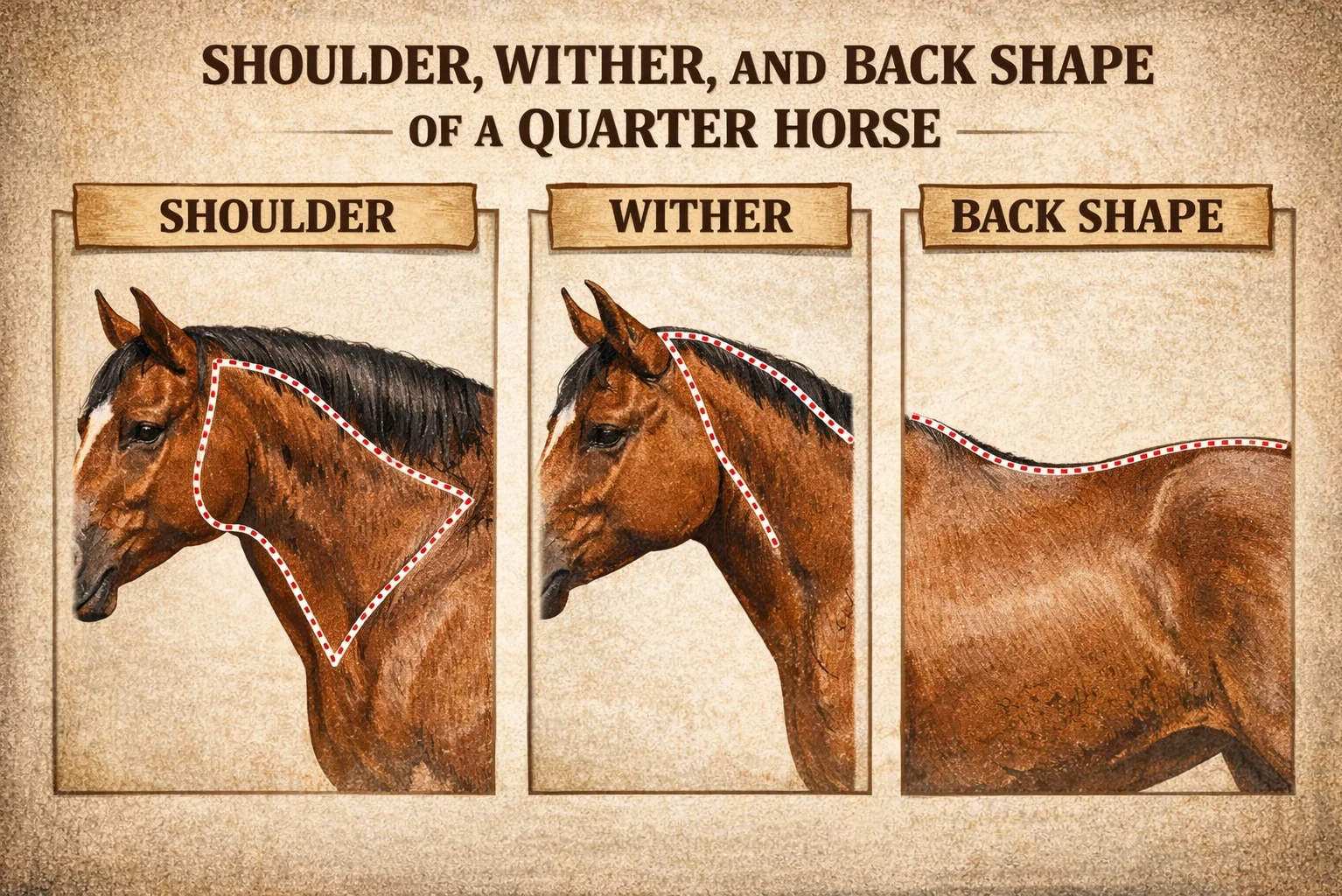
Quarter Horses often have low or rounded withers and a broad back. This means you want to avoid anything that might dig in or bridge over the back. A broad backed Quarter Horse almost always appreciates a saddle with less rock in the tree. More rock might bridge and cause pressure spots.
Preventing Shoulder Pinch: The best prevention is picking a saddle tree that has enough flare in the front. Some Western saddles offer a bit more cut back at the bars or are made with shoulder friendly designs. I watch for signs of pinching, like dry spots on the withers after riding or reluctance to move out, and adjust fit if I see them.
Spotting Bridging or Rocking: Bridging is when the saddle touches at the front and back but not in the middle, leaving a gap over the spine, while rocking is when the saddle tips like a seesaw. Run your hand along the underside and feel for even contact. If you can fit a few fingers between the saddle and your horse’s back in the middle, it probably needs a flatter tree.
Tree Shape for Low Withered Horses: For low or flat withers, look for a saddle tree labeled as “flat,” “round,” or with minimal rock. Wide gullets (7″ or more) help, too. Still, every horse’s back shape is a little different, so personal testing trumps label shopping.
Saddle Balance & Horse Comfort
Good saddle balance means the seat should be level when it’s on your horse, neither tipped up nor down. A Western saddle with a level seat usually distributes your weight evenly and avoids pressure points.
- Signs Your Saddle is Too Narrow: High up in front, pinching at the withers, or causing dry patches just behind the withers often mean the tree is too narrow.
- Signs It’s Too Wide: The saddle dips in front, rolls side to side, or sinks onto the withers. Too much gullet space can mean trouble.
- Gullet Clearance: About 2-3 fingers between the horse’s withers and the saddle is a pretty good rule of thumb, but always check from front to back, not just at the very front.
- Even Bar Contact: Slide a piece of paper or your hand under the bars and check for spots with too much pressure or gaps. Ideally, bar pressure is even front to back.
Discipline Specific Fit: Trail, Ranch, Reining, and Barrels
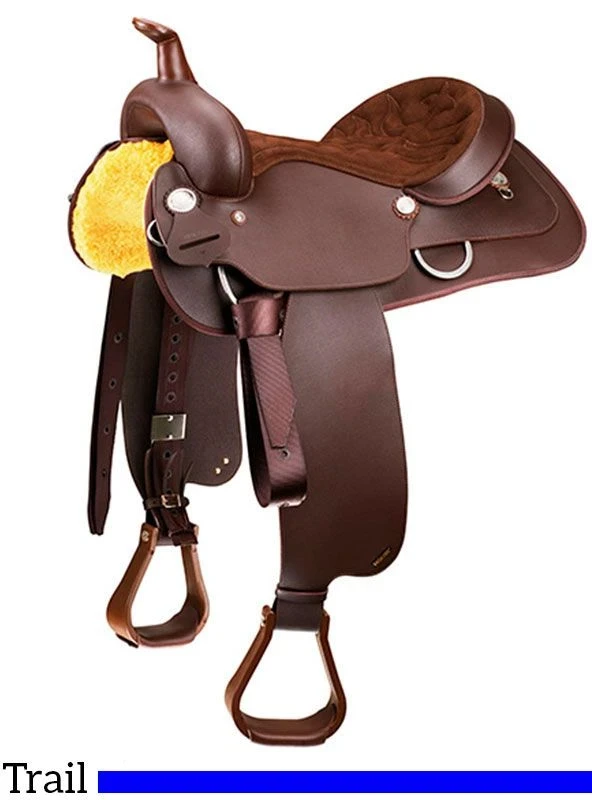
Specifications:
- Tree: Full QH bars
- Seat Size: 14” to 17” – Traditional Western sizing
- Seat: Extra foam padded seat
- Color: Black or Brown
- Conchos: Stainless Steel
- Riggings: 7/8 Position
- Swell Width: 12½”
- Cantle: 3½”
- Horn Size: 3″ neck, 2″ top
- Skirt Size: 28″ L x 14″ D
- Weight: 21 lb
- Fender lengths vary with seat size
Quarter Horses do a little bit of everything, so saddle needs change depending on what you’re doing. Here’s what I look for in different areas:
- Trail Riding: Comfort is super important, so I go for a lightweight saddle with extra padding, plenty of Drings, and a shorter skirt if my horse has a short back. Round skirts are great for shorter, compact Quarter Horses.
- Ranch Work: A sturdier, heavier saddle that fits well across a strong back gets the job done. Look for a tree that sits wide and flat, plus room for shoulder movement.
- Reining/Barrel Racing: I pick a lighter, more compact saddle built to stay out of the horse’s way. These often have a seat designed for close contact. Make sure the skirt isn’t so long it interferes with hip movement, especially on shorter backed horses. Round skirts help here, too.
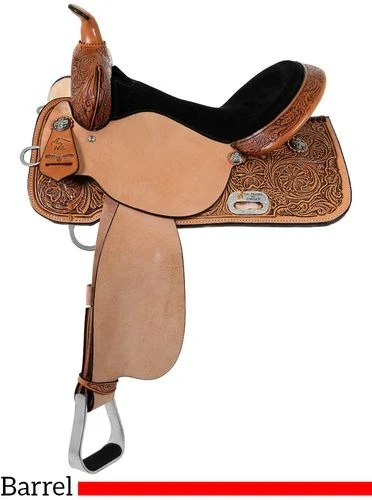
Specifications:
- Seat Size: 12″ 13″ 14″ 14.5″ 15″ 16″ 17″
- Seat Color: Black Suede
- Color: Antique, Regular Oil
- Tooling: : Floral with roughout seat jockeys
- Rigging: 3-Way Adjustable In-skirt
- Tree: Regular and Wide, X Wide (13″ and 14″ Extra wide can be special ordered)
- Cantle Height: 5″
- Silver: Antique Maltese Cross
- Swell Width: 12″
- Horn Size: 3-1/2″ Neck, 2-1/4″ Cap
- Skirt Size: 12-1/2″ Deep x 24-1/2″ Long
- Weight: Approximately 25 lbs.
Each discipline has its preferences. But comfort and fit should always come first. If you often switch things up and enjoy several disciplines, consider a saddle that offers balance.
A good all-around saddle made with a broad tree, medium depth seat, and flexible rigging can move with you from trail to arena without causing extra pressure for your Quarter Horse.
Also, keep in mind that some newer saddles come with features like soft-fleece undersides or flex-tree designs, which can give a little extra forgiving fit for changing muscle shapes throughout the year. However, always make sure these don’t just mask a bad fit. Talk with local riders and trainers to see what’s actually comfortable for horses in your region, as soil, footing, and climate can impact how your horse moves and carries a saddle.
Saddle Pads & Adjustments
Saddle pads definitely play a role but aren’t magic wands. A good pad can smooth out minor fit issues, absorb sweat, and protect your horse’s back. However, if the saddle doesn’t fit at all, no pad will fix it.
- Saddle Pad Thickness: For broad backed horses, a pad that’s about 3/4″ to 1″ thick is usually enough. Thicker pads might help a little if the saddle’s only a hair too wide, but going too thick sometimes causes more problems than it solves.
- Corrective Pads: These are helpful for small issues, like shims for minor bridging or fill for a swayback. Still, they’re not a long term solution if the saddle fit is way off.
- Check Fit as Horse Changes: Horses that gain or lose muscle during training or after time off can change shape quite a bit. I recheck saddle fit every few months or whenever I see new sweat patterns or behavior changes.
Some riders also like wool felt or gel pads for their durability and moisture wicking, while others recommend natural fleece for sensitive horses. Try a couple different pad styles to see which combination gives the best sweat pattern and comfort under your saddle.
Buying & Sizing Advice: From First Saddle To Forever Fit
Some people assume that “Quarter Horse bars” means a saddle will fit every Quarter Horse, but real life proves it’s not that simple. Here’s what’s worked best for me:
- Custom-Fit vs. Standard Saddles: Custom fit saddles can be pricey, but if you ride a lot or have unusual fit issues, the comfort and performance are hard to beat. Most people will find something off the rack that works if they do a little trial and error.
- Trying Before You Buy (Even Online): More and more shops now offer trial periods or fit kits that let you check saddles at home before you commit. Always look for these options if you can’t visit in person.
- Sizing for Young vs. Mature Horses: Young, growing horses can change shape quickly. If possible, use a cheaper or used saddle for younger horses and invest in a nicer, well-fitted one after they mature.
- Cost Expectation: A well fitting Western saddle for a Quarter Horse can run anywhere from $1,200 to over $3,000, depending on brand, leather quality, and custom options.
If you’re unsure, ask trainers, tack store staff, or other Quarter Horse owners for advice specific to your horse’s build.
Bring photos or even tracings of your horse’s back for a more exact match when shopping. Some shops even offer on-site fitting clinics, where you can try several types and get guidance from fitters.
Comfort & Behavior Red Flags
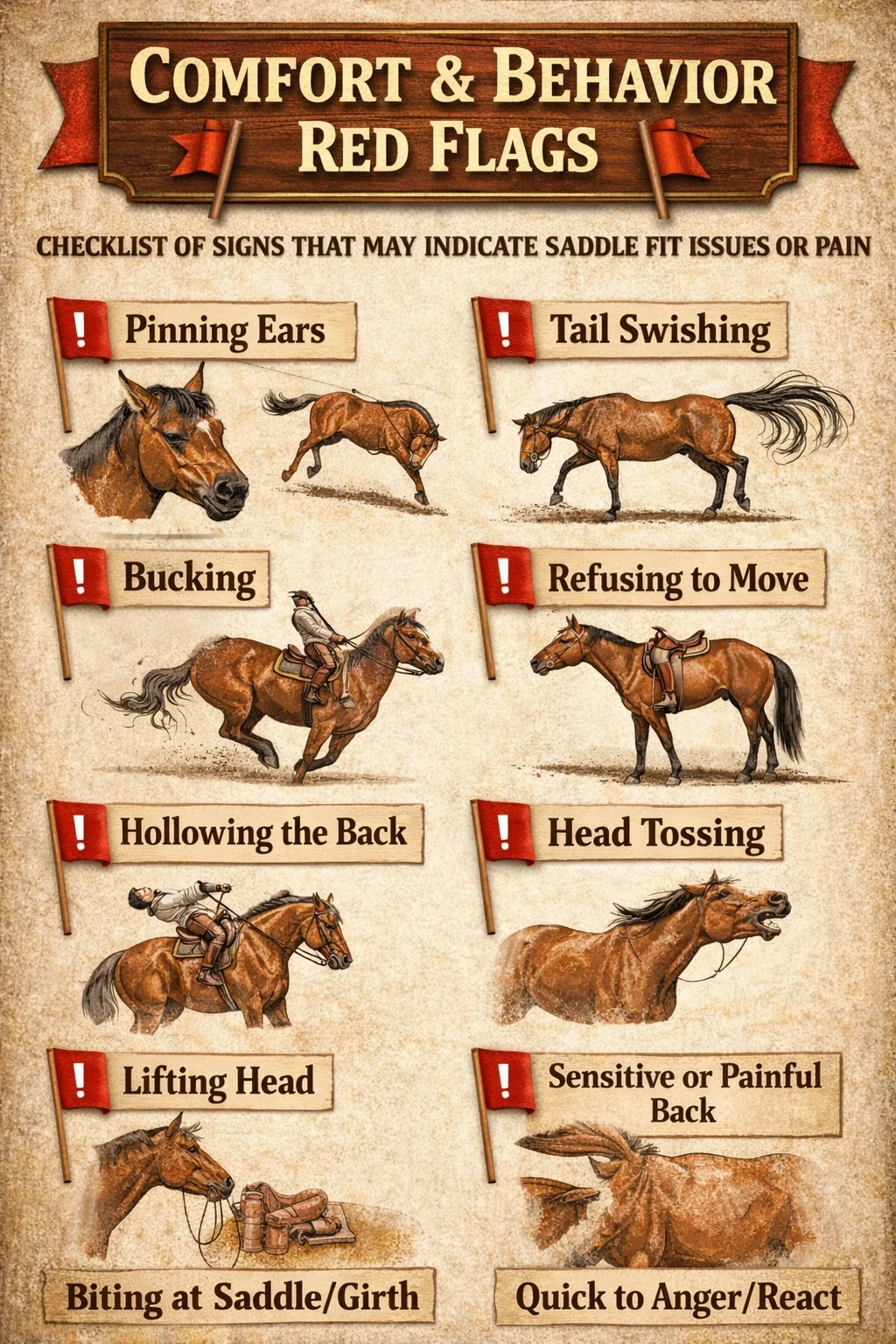 Every Quarter Horse is different, but behavior is usually your first clue that something’s wrong with saddle fit. Here’s what I pay attention to:
- Bucking or hollowing out when being saddled
- Pinned ears or swishing tail when the saddle is tightened
- Sore or tight muscles along the back after riding
- White hair patches or dry spots under the saddle area
- Sudden reluctance to pick up gaits or turn sharply
Poor fit doesn’t just lead to sore backs. It’s also linked to lost performance, crankiness, and even long term lameness. Some horses show discomfort right away.
Others take a few rides to start acting “off.”
The sooner you catch these signs, the easier it is to fix the problem. Staying sharp about small changes in your horse’s attitude and how the saddle feels is the best way to catch fit issues before they get serious.
Frequently Asked Questions
How can I make sure my new Western saddle really fits my Quarter Horse?
Try the saddle on before buying, look for even sweat patterns after a ride, and check for any dry spots or pinching. Don’t hesitate to get a professional saddle fitter to double-check if you’re unsure.
Is a round skirt always better for short backed Quarter Horses?
Round skirts are usually more comfortable for horses with short backs or strong loins, but the most important thing is whether the bars of the tree fit your horse well.
Can saddle pads fix every fit issue?
They can help minor problems but won’t fix a saddle with a totally wrong tree shape or width for your horse.
How often should I check saddle fit?
Check every few months, or sooner if your horse gains or loses weight or muscle, or if you notice any new soreness or changes in behavior.
Finding the best Western saddle for your Quarter Horse is mostly about fit, looking at real signs from your horse, and trying a few styles and brands until you hit the comfort sweet spot.
Your horse will thank you with happier rides and better performance in the long run. The right saddle will help you both get the most out of every ride, whether you’re working cows, racing barrels, or hitting the trail for some relaxation.
Did you find this post helpful? If so, please leave your comments below!
“Great topic! Saddle fit is everything with Quarter Horses because their backs are so different. I’ve found the best way to know what fits is to try the saddle on and check for even contact, no pinching, and good gullet clearance. What saddle tree has worked best for your horse?”
Have you ever had a saddle that didn’t fit your Quarter Horse? What signs did your horse show (like dry spots, pinching, or reluctance to move), and how did you solve the problem?
Oh yes — I’ve definitely had a saddle that didn’t fit my Quarter Horse, and he made it obvious pretty fast.
The biggest signs were uneven sweat marks (dry spots), shoulder pinching, and a reluctance to move forward. He’d shorten his stride and sometimes feel stiff or resistant when loping. That was my red flag.
In my experience, most Quarter Horses do best in a medium-wide or wide tree, but it really depends on their individual back shape. When I switched to a wider tree with better bar contact and proper gullet clearance, the dry spots disappeared and his movement immediately improved.
For me, the right tree wasn’t just about size — it was about matching the bar angle to his back so the saddle sat evenly without rocking or bridging.
Finally, an article that cuts through the noise and gets to what actually matters when fitting a Quarter Horse! Your focus on seeking a professional fitter and using a qualified saddle pad is such sound, responsible advice that can prevent so many issues. The visual guides for gullet width and bar angle are exactly what people need to understand the basics before they even start shopping. I’ve bookmarked this to share with everyone at my barn—it’s the perfect primer for both new riders and experienced ones who might need a refresher on the fundamentals of correct saddle fit for this wonderful breed. Excellent work!
Hi Cian.
Thank you so much for your thoughtful comment! I’m really glad the article resonated with you and helped clarify the key points of saddle fit for Quarter Horses. It means a lot that you found the visual guides useful and that you’ll be sharing this with your barn community! If you or anyone else has follow-up questions, I’m always happy to help.